Summary of Episode 6
The episode opens with a flash-forward: the disciples rush into an inn carrying a badly injured Big James. The story then rewinds to the start of Hanukkah. After lighting the first candle, the disciples retell Israel’s history, including Antiochus Epiphanes and the Temple’s desecration, and they exchange gifts.
Relationships sit at the center. John notices people others miss: he gives Matthew writing supplies, checks on Thomas’ grief, senses Judas’ frustration, and tries to encourage them all. Peter also attempts to strengthen Thomas.
Even amid these intentional acts of care, tension continues to grow around Judas. When Matthew realizes the money bag is far lower than expected, he tries to ask questions without sparking a fight. Judas feels misunderstood, and after the group rejects his idea for organized donation stations, he pulls back even further.
As psalms are sung over the nights of Hanukkah, Jesus tells the disciples he will go to Jerusalem to teach in the Temple. Then, news arrives that Lazarus is sick, and Jesus says the illness will not lead to death.
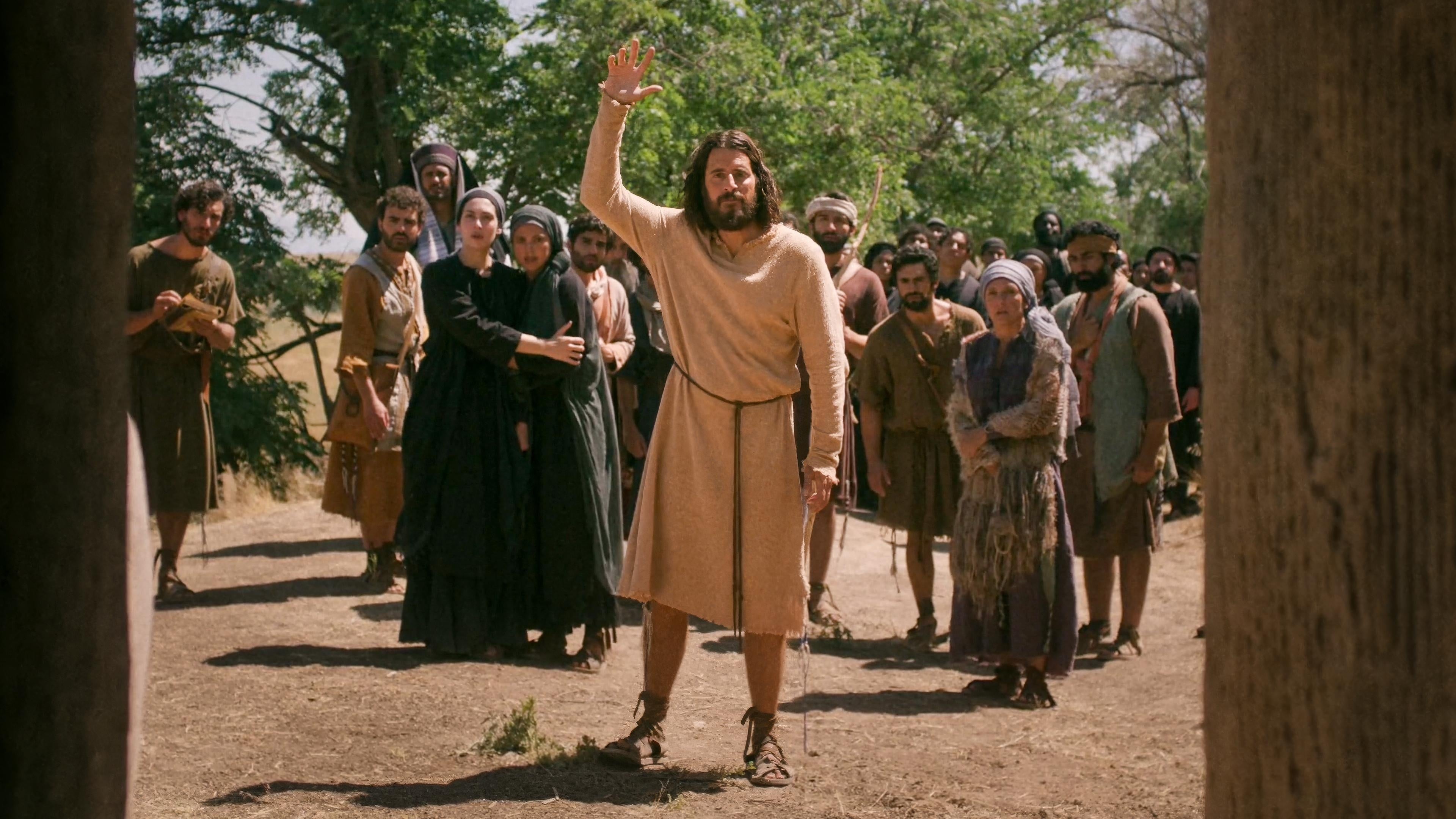
On the final day, the group travels to Jerusalem. At the Temple, Jesus speaks about the Good Shepherd and says that he and the Father are one. Religious leaders respond with violence and attempt to stone him, but Big James is struck instead. The disciples flee across the Jordan and return to the inn from the opening scene. Zebedee arrives with word of a plot against Jesus. Jesus gives Mary Magdalene a letter saying Lazarus has died. While the others are confused, Mary recognizes Jesus’ grief.
Time for Personal Reflection and Summary
After the episode, invite participants to take a few moments of silence to reflect on what they’ve just experienced. Encourage them to think about what resonated with them, what caught them by surprise, or what was unclear. Next, invite them to think about the characters and consider whether they can identify with them or their situations. Encourage them to write down their thoughts or prepare them for a group discussion.
After a few moments of quiet reflection, invite the group to share the moments from the episode that stood out to them. You can use the “Episode Summary” to help you with this. Try to fill in the details you have noticed are missing from the summary. You can also use more creative methods to compose the summary.
Tip: For a more interactive way to summarize the episode, try using a mind map, The 5W1H Method, or other creative approaches. You can find these in the Leader Resources section online.
Some of the series’ concepts and themes may not be clear to all participants. A “Glossary of Terms” is provided to help with this.
Bible References
Primary Verses
John 10:1-42; 11:1-16
Supporting Verses
Psalm 113; 115; 116; 118
Matthew 19:1
Mark 10:1
John 7:30; 8:19-20
Discussion
In the next section, you will facilitate the group discussion. You can use the questions in their entirety or select those relevant to your group.
What resonated most with you in this episode, and why?
This episode starts around Hanukkah, with candles, stories, and gifts. What is a holiday or tradition that feels meaningful to you, and what makes it special?
John shows care in several small ways throughout the episode. When someone around you is struggling, what kind of care do you naturally offer? What kind of care helps you most when you’re struggling?
Examples might be: words, time, practical help, presence, humor, silence, or something else.
Thomas is still present, but you can tell he’s carrying grief and fear. What do you think it feels like to be in a group, but not fully able to join in?
Similarly, Judas is also present, but he starts pulling away for different reasons—frustration, money, control, being misunderstood. What do you think is happening inside him? What usually pushes a person to distance themselves from others?
The Pharisees respond to Jesus with open hostility. Even today, Christians in many parts of the world still face serious pressure or persecution because of their faith. Why do you think faith in Jesus can provoke such strong reactions?
This question helps participants consider that following Jesus can involve real social or personal cost.
When Jesus says things like “I and the Father are one,” it forces a choice. Either he is telling the truth, or he’s dangerously wrong. When someone says something controversial, how do you usually react? Do you lean in, step back, argue, ignore it, or something else?
In this episode, Jesus speaks about Lazarus in a way that confuses and unsettles the disciples. Read John 11:5–16 together. What stands out to you about the different ways Jesus and the disciples respond to what is happening with Lazarus?
An important part of this episode is the passage Jesus speaks in Jerusalem, recorded by John. Read John 10 together again, and answer the following questions.
- What does it mean to you that Jesus is “the Good Shepherd”? Try to explain this using concrete examples.
- How do you understand the words that Jesus, as “the Good Shepherd,” “lays down his life for the sheep”?
- What does it mean when Jesus says that his sheep “know his voice”?
- How do you think different people in the crowd might hear Jesus’ words about being “the Good Shepherd”?
Note: You do not need to cover every question below. Choose one or two that best fit your group.
The disciples quote Scripture, sing psalms, and act out the story of their faith. What helps God’s Word stay alive in your heart rather than becoming routine?
Basic Questions
This first set of questions is straightforward and open-ended—great for seekers or those new to faith.
Advanced Questions
These questions are more in-depth and best suited for Christians and more mature participants. Use your discretion to select the ones that best fit your group.
Conclusion
At the close of the discussion time, take a moment to highlight the main ideas that came up during your conversation. The questions in this club meeting touched on the theme of “costly belief” and how we respond to Jesus’ bold claims.
You can read the quote from the episode below as a final reflection and encouragement. Invite participants to reflect on the message of this episode and consider how it might speak into their own lives.
KEY TAKEAWAY
“Surely ignorance is no match for who Jesus is.”
—Zebedee to Jairus
Afterward, you may want to allow a short moment of silence, prayer, or a smooth transition into the next activity.
Suggested Accompanying Activities
This can be at the beginning or the end of the meeting.
Give each participant a decorated sheet with their name on it and attach it to their back. Allow several minutes for everyone to write kind observations or encouragements on one another’s sheets, anonymously or signed. Afterward, invite participants to read their messages and reflect on how others (and God) see them.
The Mood Detector. Give everyone five seconds to look around at each other, then close their eyes. Ask them to recall what the person beside them is wearing and how their mood seemed when they arrived. Open your eyes, compare details, and ask how they are actually doing. Connect the difference between noticing and assuming to John’s attentiveness to the other apostles in the episode.
You can find suggestions for extra games and activities in the Group Activities Library on the Leader Resources page.
Glossary of Terms
Hanukkah (Festival of Lights)
An eight-day Jewish festival that commemorates events in the 2nd century BC, when the Seleucid ruler Antiochus IV outlawed Jewish religious practices and desecrated the Jerusalem Temple. A revolt led by Judah Maccabee defeated his forces, and the Temple was purified and rededicated. Jewish tradition recalls that a small supply of ritually pure oil for the Temple menorah, meant for one day, lasted eight. Hanukkah came to symbolize faithfulness under pressure, resistance to oppression, and light overcoming darkness.

Stoning
A form of capital punishment prescribed in the Mosaic Law for certain offenses, including blasphemy. When Jesus says, “I and the Father are one,” his hearers understand this as a claim to divine identity, which they interpret as blasphemy. For this reason, they attempt to stone him.
Le’chaim
A Hebrew toast meaning “to life.” In Jewish tradition, wine symbolizes joy and blessing, and this expression is commonly used at weddings, Sabbaths, and festivals.
Song of Miriam
The Song of Miriam is a short song of praise led by Miriam (Moses’ sister) after Israel crossed the Red Sea (Ex. 15:20–21). It celebrates God’s deliverance from slavery and expresses joy, gratitude, and trust after rescue.
Solomon’s Temple / The Second Temple
Solomon’s Temple was Israel’s first central place of worship and symbolized God’s presence among his people. After its destruction by Babylon, a second Temple was built, later desecrated by the Seleucids and rededicated during the Maccabean period. By the time of Jesus, worship took place in this Second Temple. When Jesus claims unity with the Father, he makes a statement that directly challenges prevailing understandings of where and how God is to be worshiped.