Getting Started
This study guide is designed to help small group leaders facilitate engaging and meaningful discussions on The Chosen. Whether you're leading a Chosen Club, a youth group, or a discussion group, these materials will support thoughtful conversations and deeper reflection. The goal of this guide is to suggest the flow of these meetings; however, it is also important to consider the individuality of these groups and customize the event for each group. This website includes lessons focused on individual episodes of The Chosen.
We recommend regular weekly meetings for eight weeks in a row. Taking longer breaks or having irregular meetings can make it harder for people to stay connected and engaged. The meeting should be held at the same location and time each week. When the meeting has a regular rhythm and location, it's easier for people to attend—and to invite others along. The place should have a pleasant and welcoming feel. You might also consider the type of seating for watching the episodes and the following group discussions.
You will need access to the Internet to project the episode, so check your connection beforehand. Ensure you have prepared the projector or television and that the screen is big enough for everyone to see. It is also important to ensure that you are using a good sound system.
Prayer is an essential pillar of preparation. We believe that God is the one who opens people's hearts and minds, and that he will use this show and the meeting to introduce himself to them in a new light. Pray for God to fill you with the Holy Spirit and prepare you for your leadership role. Pray for all who attend the events—the ones you know and those who are new. Pray that God opens doors for meaningful conversations about the Gospel and speaks to each person in a personal way.
You can watch episodes on watch.thechosen.tv
Prayer is another important pillar of preparation. We believe that God is the one who opens hearts and minds and can use this series and meeting to do so. Pray for all who attend the meeting, whether familiar or new participants. Pray that God will open doors to share the gospel and speak in his own unique way to each participant. Pray also for the practical aspects of preparing for the meeting.
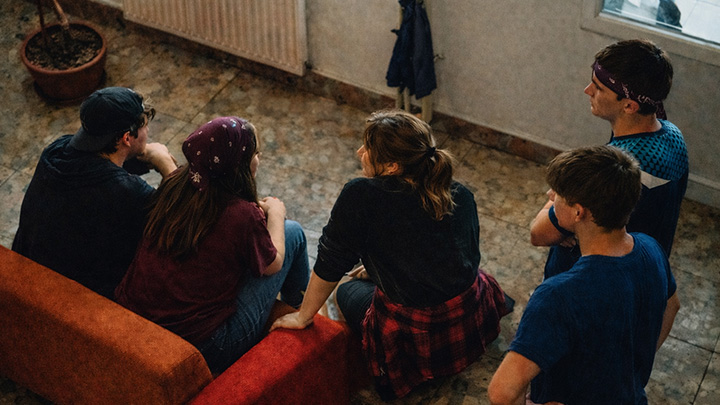
You can watch the show together, but consider dividing people into smaller groups afterward. (Ideally, have about 4-10 people in each group.) Breaking into smaller groups helps people feel more comfortable sharing their thoughts while keeping the conversation more personal and confidential. There should be one leader in each group. We recommend that these leaders watch the episodes and study the material beforehand. Proper preparation is critical for adjusting the meeting for each group, participant, and the allotted time. Note that discussions at youth group meetings will differ from those at The Chosen Clubs, which are open to people who have never met Jesus.
1. Prepare with Prayer and Purpose
Before the group meets, pray for wisdom, open hearts, and guidance. Think about your goal for the discussion: Are you helping the group connect the episode to Scripture, inviting seekers to share their thoughts, or fostering discipleship-minded fellowship? A clear purpose helps to steer the conversation.
2. Use the Provided Questions Thoughtfully
The provided discussion questions are designed to spark meaningful conversations, but they're just tools—feel free to adapt them to fit your group's unique dynamic.
- Follow the Spirit's Lead: Don't feel pressured to move on too quickly if a question resonates deeply with the group. Conversely, if a question isn't sparking much engagement, it's okay to pivot or rephrase it to suit the moment better.
- Ask Follow-Up Questions: Build on the provided questions by asking, "Can you give an example?" or "How does this apply to your life right now?" This encourages deeper thinking and personal application.
- Create Space for Organic Moments: Don't expect to cover every question. Sometimes, the most impactful discussions arise from unexpected tangents or questions that deeply connect with the group.
"Silently praying during the discussion is a great way to listen to the Spirit's leading."
3. Engage All Participants
Balancing participation can be tricky but important.
- For quiet participants: Gently and personally invite them in with questions like, "What do you think about that, [name]?" or "I'd love to hear from someone who hasn't shared yet." Encourage them but don't push them.
- For dominant participants: Thank them for their enthusiasm, but create space for others by saying, "That's a great point! Let's hear from someone else," or by redirecting with, "How about we get a few other perspectives?"
- For those with negative attitudes: If someone consistently expresses pessimistic or critical views, don't let them influence the entire topic and discussion. Try to give them space to express their feelings, but, at the same time, gently direct them to look for the positive aspects.
- Encourage their participation: When someone contributes to the discussion, you can encourage them by saying, for example, "That's a great point!" or "Thanks for your openness and sharing." This fosters an atmosphere where participants feel valued and motivated to participate more.
4. Be a Guide, Not a Lecturer
Your role is to facilitate and guide the conversation, not dominate. Listen more than you talk, and encourage quieter members to share. If the group goes off-topic, gently guide it back with something like, "That's an interesting thought! How does that relate to what we read earlier?"
"Your role is to facilitate. Listen more than you talk."
5. Foster Real Connections
Great discussions are just as much about building relationships as they are about the content. Share a bit of your own journey to model vulnerability and honesty, but keep the focus on the group. Celebrate insights and encourage mutual support.
6. Adapt and Be Patient
Not every session will go as planned, and that's okay! Trust God to work in the conversations, even if they don't follow your plan. Stay flexible and responsive to the group's needs.
7. Wrap Up with Clarity and Prayer
Summarize key takeaways and ideas at the end. This helps the group reflect on what they've learned. Finish with a prayer that ties into the discussion and points everyone back to God.
This material is divided into several parts. You’ll find a brief summary of the episode to get you started. You can summarize the episode together or retell the show's plot in a normal or interactive way. For example, you could use the “5W + 1H questions” method, make a mind map, or use an app like the Slido app—which is available for download separately. Each episode speaks on different levels—some people might notice the main storyline, while others who know the gospel well might catch deeper themes, historical context, or spiritual insights. Seeing what each participant noticed will be interesting and beneficial to you as the discussion leader.
5W & 1H = Who? What? Where? When? Why? How? This method sequentially goes through these questions in a predefined order.
The main framework of each episode is based on texts from the Bible. At the same time, some plot details have been added by the series' creators, and it is necessary to consider the film's adaptation process and creative interpretation. The creators of The Chosen have kept the heart of the gospel intact while adding some creative elements to the story. Nevertheless, returning to the Bible's original text is strongly suggested to anchor our thinking. Each episode includes biblical references that you can use in group discussion or self-study for reflection. You might consider exploring where these verses appear in the storyline, how the show’s adaptation compares to the original text, or what personally stood out to you as you read them.
The story of The Chosen takes place in a Roman-Jewish setting, so understanding the cultural context can make the stories come to life in new ways. The glossary at the end of each lesson explains some of the cultural and historical terms used in each episode.
The most important part of the event is the discussion. The open-ended questions are meant to spark reflection and interaction, so your role is to guide the conversation rather than teach. Encourage people to share their thoughts and listen to each other. We recommend reviewing the questions in advance and selecting those that best suit your group. They are divided into introductory (lighter) and deeper categories, with greater engagement expected for the latter.
Each gathering should last approximately two hours, depending on the depth of the discussion and the supporting activities chosen.
Each gathering should last about two hours, though the timing may vary based on the discussion depth and any additional activities. Consider incorporating activities from the provided list to enhance engagement. Remember, not every question will resonate with every participant, so, as a leader, choose the ones that best fit your group. This study offers a selection of questions to explore key themes, but feel free to adapt or add your own. And finally, one more tip: food always makes the gathering feel more welcoming!
This series features many powerful scenes that naturally create opportunities to share the Gospel. In the "How to Follow Jesus" section or the "know-how" video section, you will find practical guidance to help you share the Gospel clearly, understandably, and with greater confidence during conversations about faith.
Finally, we encourage you to use The Chosen series as a unique opportunity to reach out to classmates, friends, and acquaintances who may not know Jesus or are seeking him. We believe The Chosen series can be a powerful tool for introducing Jesus and connecting with those outside the church when we pair the biblical message with our personal testimony of God’s love, power, and a welcoming community.