
Summary of Episode 3
The episode weaves together questions of God’s mysterious ways, rising conflict, and the danger of power. It opens with a story from Israel’s past, as David and Bathsheba grieve the loss of their child, confronting the painful question of why God sometimes answers prayers and sometimes does not. That same question echoes in the present, as people ask Jesus why a man named Uzziah was born blind. Jesus offers a different perspective, teaching that God’s purposes often unfold beyond human understanding and that healing can reveal God’s glory in unexpected ways.
As Jesus heals Uzziah on the Sabbath and boldly confronts the Pharisees, tension escalates. Jesus reminds his followers that he did not come to bring peace, but division, and his public teaching draws increasing attention from both religious leaders and Rome. Rather than avoiding conflict, Jesus presses forward, showing that truth matters more than comfort or safety.
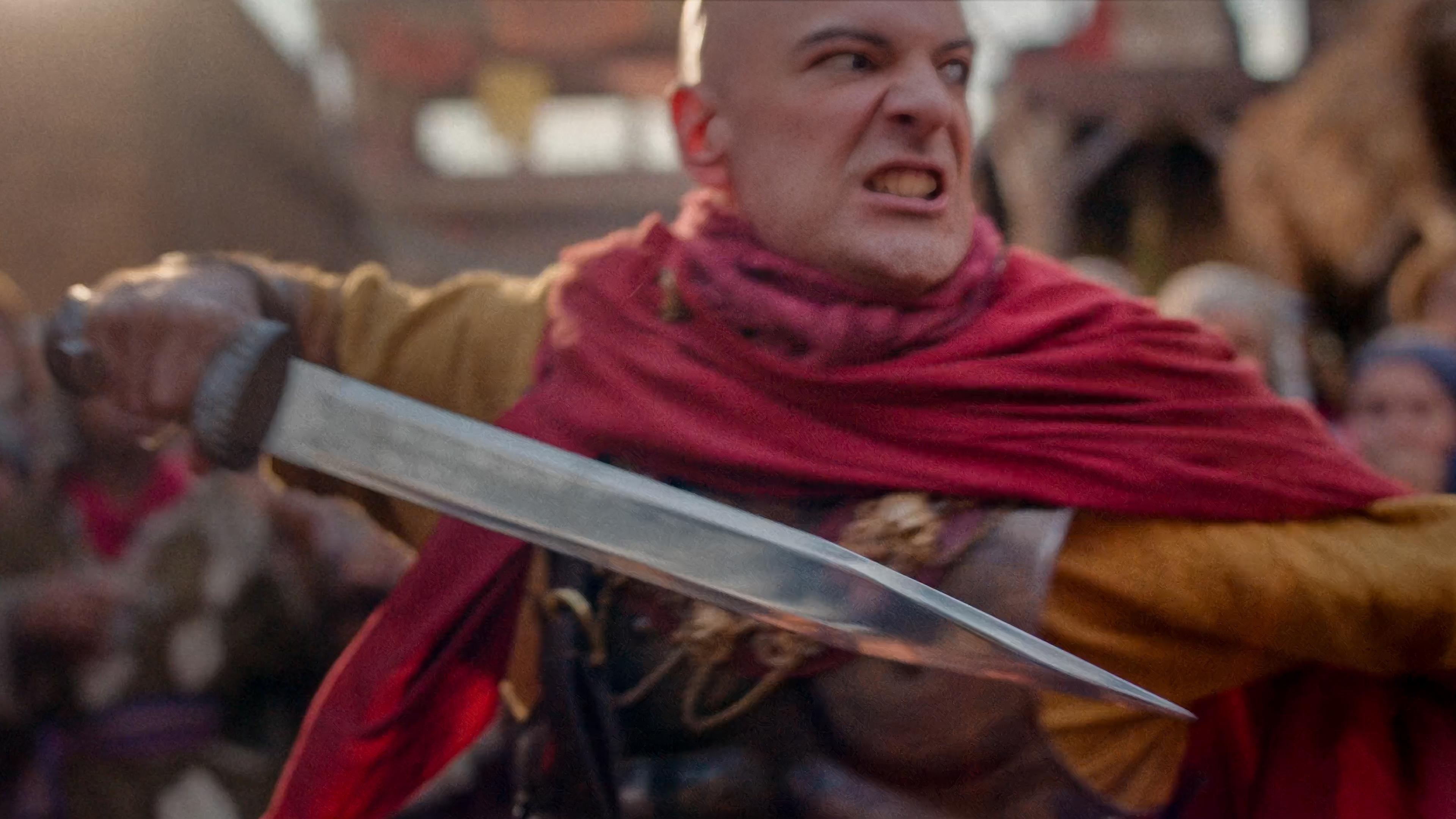
The episode also explores power and its misuse. David’s grief is tied to his abuse of authority, while in the present, Quintus responds to threats against his power with violence and intimidation. Gaius is forced to choose between protecting his position or doing what is right, ultimately risking everything by refusing to arrest Jesus. Even among the disciples, flawed ideas of power surface when Big James reacts with violence.
The episode reaches a devastating climax when Ramah is killed during the Roman intervention. Thomas desperately pleads with Jesus to save her, but Jesus, moved with sorrow, does not intervene and instead assures Thomas of his love. The disciples are left to wrestle with grief, unanswered prayers, and a faith that must mature without easy explanations. The episode closes by reminding us that God works in ways we do not control, that following Jesus can bring conflict, and that true power is often revealed through surrender rather than force.
Time for Personal Reflection and Summary
After the episode, invite participants to take a few moments of silence to reflect on what they’ve just experienced. Encourage them to think about what resonated with them, what caught them by surprise, or what was unclear. Next, invite them to think about the characters and consider whether they can identify with them or their situations. Encourage them to write down their thoughts or prepare them for a group discussion.
After a few moments of quiet reflection, invite the group to share the moments from the episode that stood out to them. You can use the “Episode Summary” to help you with this. Try to fill in the details you have noticed are missing from the summary. You can also use more creative methods to compose the summary.
Tip: For a more interactive way to summarize the episode, try using a mind map, The 5W1H Method, or other creative approaches. You can find these in the Leader Resources section online.
Some of the series’ concepts and themes may not be clear to all participants. A “Glossary of Terms” is provided to help with this.
Bible References
Primary Verses
2 Samuel 12:13–23
John 9:1–41
Matthew 12:38–42; 23:1–36
Supporting Verses
Matthew 10:34; 12:49–50; 16:1–12
Mark 3:34–35; 4:22; 7:3–4; 8:11–21
Luke 8:17, 21; 11:27–32, 39–54; 12:1–3, 51
John 8:12
Discussion
In the next section, you will facilitate the group discussion. You can use the questions in their entirety or select those relevant to your group.
What resonated most with you in this episode, and why?
Early in the episode, we see moments between Thomas and Ramah before things become more intense. What stood out to you about the way they related to each other?
When something doesn’t turn out the way you hoped, what’s usually your first reaction?
When tension rises in the episode, different characters react very differently. What contrasts did you notice in how people responded?
For example:
Jesus - purpose
The Pharisees - defensiveness
Big James - anger
Thomas - desperation
David - grief, then later acceptance
Quintus - force
Gaius - restraintEarly in the episode, we see King David grieving the loss of his child, then choosing to eat and worship again. What stood out to you about the way he responded to the entire situation?
See glossary for more information about David and Bathsheba.
At different points, people ask Jesus for signs, power, or clear outcomes. Why might someone who is unsure about God, still pray for help or a sign? Have you ever tried praying to God?
Read John 9:1–7 together, where Jesus heals the man born blind. What do you notice about how Jesus explains suffering, and how the man responds to Jesus’ instruction?
Later, the healed man is questioned inside the synagogue and pressured to explain himself. What do you notice about how he speaks, and what gives him confidence in that moment?
Read John 9:39 together. What do you think Jesus is pointing to here? As you think back over the episode, which characters seemed to have been blind to what they had seen?
Gaius refuses to act against Jesus and risks his position and future. What does this scene suggest about the cost of integrity or faith? Where do you see similar tensions today?
You might follow up and ask: Do you have an example of this, maybe from your own life?
Near the end of the episode, Big James wants to respond to injustice with violence, while Jesus responds with calm authority and love. Are there areas where you notice anger shaping your actions or decisions? What might it look like to respond differently?
In this episode, people want Jesus to prove himself or give them the outcome they seek. Read the Lord’s Prayer in Matthew 6:9-13. What does it look like to pray honestly for what we want while remaining open to God’s will?
Basic Questions
This first set of questions is straightforward and open-ended—great for seekers or those new to faith.
Advanced Questions
These questions are more in-depth and best suited for Christians and more mature participants. Use your discretion to select the ones that best fit your group.
Conclusion
At the close of the discussion time, take a moment to highlight the main ideas that came up during your conversation. The questions in this club meeting touched on the theme of “God’s mysterious ways” and whether we trust him when we do not understand.
You can read the quote from the episode below as a final reflection and encouragement. Invite participants to reflect on the message of this episode and consider how it might speak into their own lives.
KEY TAKEAWAY
“Why some prayers and not others?”
—Bathsheba to King David
Afterward, you may want to allow a short moment of silence, prayer, or a smooth transition into the next activity.
Suggested Accompanying Activities
This can be at the beginning or the end of the meeting.
Pause and Process. This episode is emotionally intense, so give participants space to process before beginning the discussion. Try to sit in silence for one minute, then play quiet instrumental music and invite everyone to draw or write as they process what they watched. Sharing is optional. End with a short prayer.
Witness on the Stand. Send one participant outside while the group invents an absurd event. When the participant returns to the “witness chair,” everyone questions them as a suspect or eyewitness, revealing clues along the way. The participant improvises answers while trying to identify the event. You can connect the experience to the healed man’s interrogation.
Give everyone a two-sided card. On one side, privately write a question or a difficult life circumstance. On the other, have them write a truth to hold onto, like: “Jesus welcomes my honesty”, “I am not alone,” or “I can stay close to God even without answers.” Then, have them complete this phrase aloud: “Jesus, I don’t understand this, but help me remember that ___.” Allow time for silent prayer, then close together. Participants keep their cards.
You can find suggestions for extra games and activities in the Group Activities Library on the Leader Resources page.
Glossary of Terms
Boker tov
A common Hebrew greeting meaning “good morning.”

David and Bathsheba (2 Samuel 11–12)
King David abused his power by summoning Bathsheba, the wife of Uriah, and sleeping with her. When she became pregnant, David tried to hide what had happened and eventually arranged Uriah’s death. God confronted David through the prophet Nathan. David repented and was forgiven, but he still faced serious consequences. Bathsheba later became the mother of Solomon, placing this story within the family line that leads to Jesus.
Healing the blind man on the Sabbath
Jesus heals a man born blind on the Sabbath, provoking conflict with the Pharisees. Their interpretation of the law forbade healing as “work,” while Jesus emphasized that doing good and showing mercy align with God’s true intent for the Sabbath.
“Put out of the synagogue.”
To be “put out of the synagogue” meant being expelled from the local religious community. This carried serious social and economic consequences, including loss of reputation, relationships, and communal support.
Sign of Jonah
When Jesus speaks of the “sign of Jonah,” he points to Jonah’s three days in the fish as a foreshadowing of his own death and resurrection. It is a call to repentance and a warning that demanding signs while refusing to repent leads to spiritual blindness. (See Jonah 1:17 and Luke 11:29.)
Nineveh
A pagan city that repented after hearing Jonah’s message. Jesus contrasts Nineveh with the Pharisees, warning that religious pride can lead to spiritual blindness, even when God’s truth is clearly present.