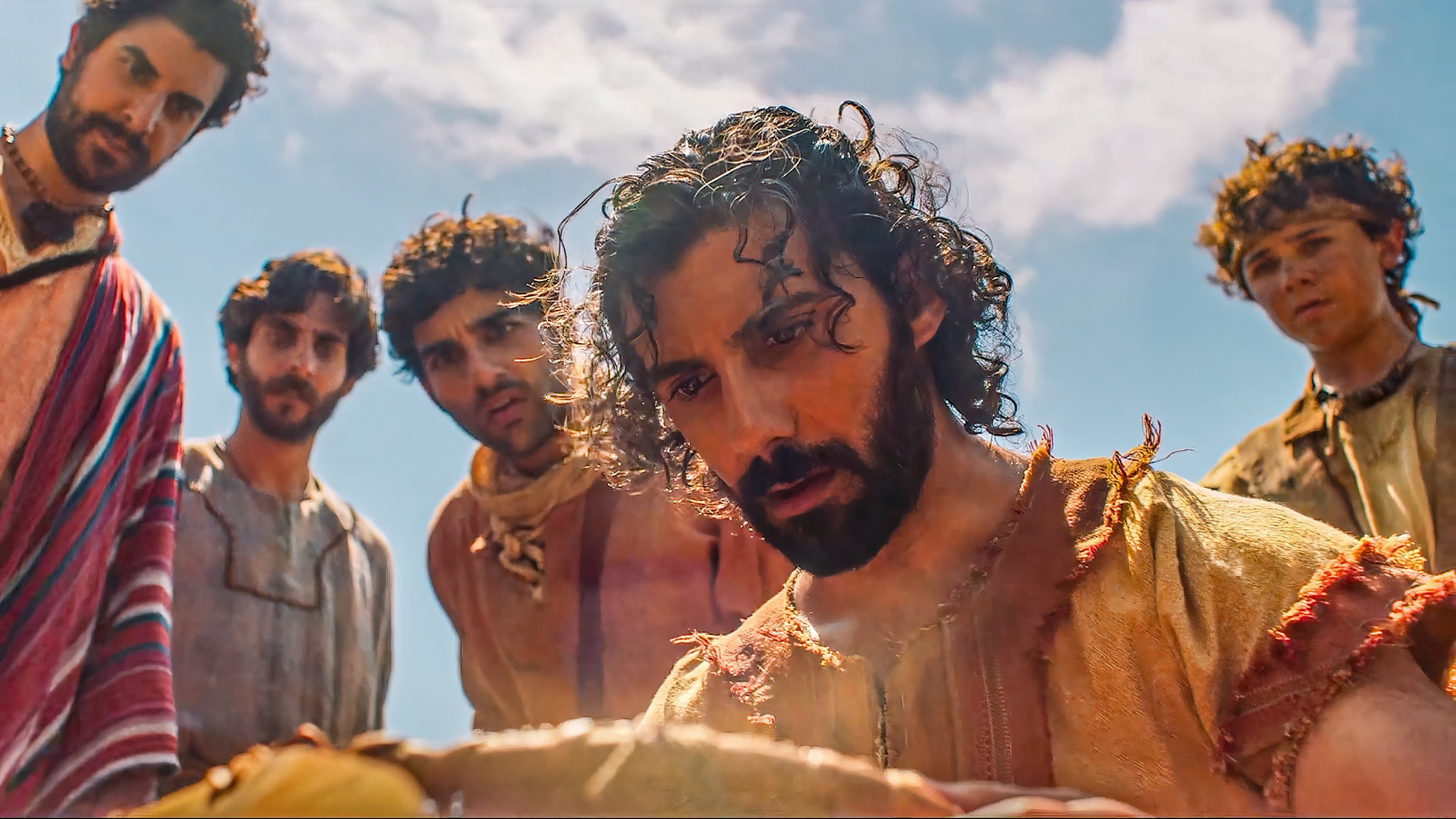

Summary of Episode 7
During the festival of Purim, a celebration of God’s deliverance, joy fills Capernaum. Yet Simon, still grieving Eden’s miscarriage, wanders the city in anger and even crosses into the Roman Quarter. While Zebedee’s family celebrates, Simon smashes wine jars on his rooftop, wrestling with what feels like Jesus’ silence.
In the Decapolis, the disciples attempt to ease rising ethnic tensions by sharing the Parable of the Great Banquet, but the message only deepens division. Andrew and Philip return urgently, asking Jesus to come and intervene. Opposition builds from every direction: Syrophoenicians demand signs, Nabateans mock the idea of a Messiah, and Jewish locals resist Gentile inclusion.
A quiet but powerful thread runs through the episode: the priceless nature of faith. In Matthew’s past, an elderly shepherd takes on his family’s crushing debts, surrendering his freedom so they might live unburdened. Before his arrest, he gives Matthew rare prayer tassels from the Babylonian exile. Matthew fixates on their monetary value, but Mary helps him see the deeper gift: an invitation back into faith. For the first time, Matthew begins to believe that his story is not defined by shame but by redemption.
Meanwhile, Gaius reveals that his sick servant Ivo is also his son. Jesus insists that Simon still matters to the mission, even in his turmoil. In Abila, a boy named Telemachus pleads for his deaf and mute father. Despite the disciples’ hesitation, Jesus honors the boy’s faith and restores the man.
Crowds continue to gather. Conflict intensifies. Yet amid division and doubt, faith quietly grows.
Time for Personal Reflection and Summary
After the episode, invite participants to take a few moments of silence to reflect on what they’ve just experienced. Encourage them to think about what resonated with them, what caught them by surprise, or what was unclear. Next, invite them to think about the characters and consider whether they can identify with them or their situations. Encourage them to write down their thoughts or prepare them for a group discussion.
After a few moments of quiet reflection, invite the group to share the moments from the episode that stood out to them. You can use the “Episode Summary” to help you with this. Try to fill in the details you have noticed are missing from the summary. You can also use more creative methods to compose the summary.
Tip: For a more interactive way to summarize the episode, try using a mind map, The 5W1H Method, or other creative approaches. You can find these in the Leader Resources section online.
Some of the series’ concepts and themes may not be clear to all participants. A “Glossary of Terms” is provided to help with this.
Bible References
Matthew 1:1-17
Matthew 12:18-21
Mark 7:31-37
Luke 14:12-24
Isaiah 42:1-4
Jeremiah 6:16
Isaiah 43:19
Esther 3:1-6, 9:26-32
Discussion
In the next section, you will facilitate the group discussion. You can use the questions in their entirety or select those relevant to your group.
What resonated most with you in this episode, and why?
Have you ever tried to explain something important, only to realize the other person didn’t really understand you? What do you think most often gets in the way of truly listening to one another?
The title “Ears to Hear” suggests more than just hearing words. In everyday life, what do you think it looks like to really listen in a way that leads to understanding or change?
The disciples each react differently under pressure. Who in this episode responded in a way you relate to, and why?
Read Luke 14:12–24, the parable shared in the Decapolis. In the episode, Judas explains how different groups reacted to the story. What stood out to you about how the Jews, Gentiles, and religious leaders each heard it differently?
The Jews questioned Gentile inclusion, Gentiles felt like second-class guests, and traditionalists heard a rebuke.
After the old man gives Matthew the tassels, Matthew struggles for years to accept what they really mean. He questions the man’s motives, pushes back against Mary, and keeps them hidden away. Why do you think he struggles to see what the man was really trying to give him?
The old man explains that faith is more valuable than gold and more precious than rubies.
Read Psalm 13 together. This psalm begins in frustration and ends in trust. How might this psalm help give voice to what Simon is feeling toward Jesus in this episode? Or even yourself?
John tells Jesus he’s tired of always waiting for Simon and wonders if he’ll always be the one waiting while others are chosen. When we feel overlooked, why is it so easy to let that trigger doubts about our own value or purpose?
This may be a moment to start a Gospel-centered conversation on how Jesus sees and cares for every pain and everyone.
In the parable of the banquet (Luke 14:12–24), many of us instinctively feel that Gentiles belong at the table, especially since we ourselves are included. Looking honestly, are there people we struggle to welcome without conditions? Who might we hesitate to “invite” into the Christian community, even quietly?
Simon has followed Jesus, served faithfully, and given up much, yet his life still falls apart, and Eden’s pain remains unchanged. What does this reveal about the way Jesus loves us? What helps someone keep trusting when faith doesn’t remove the pain?
Jesus often speaks about having “ears to hear,” meaning not just listening, but responding. Where in your life do you sense God inviting you to move from hearing to obedience?
Matthew cannot understand why the old man would willingly take on the debts of his entire family. The man chooses suffering so others can go free. How does that image help you understand what Jesus has done for us? When was the last time you paused to really think about what that means for you personally?
Basic Questions
This first set of questions is straightforward and open-ended—great for seekers or those new to faith.
Advanced Questions
These questions are more in-depth and best suited for Christians and more mature participants. Use your discretion to select the ones that best fit your group.
Conclusion
At the close of the discussion time, take a moment to highlight the main ideas that came up during your conversation. The questions in this club meeting touched on the theme of “courage to listen to God, to others, and to ourselves.”
You can read the quote from the episode below as a final reflection and encouragement. Invite participants to reflect on the message of this episode and consider how it might speak into their own lives.
KEY TAKEAWAY
“The longer you don’t say something, the worse it gets.”
—Simon to Gaius
Afterward, you may want to allow a short moment of silence, prayer, or a smooth transition into the next activity.
Suggested Accompanying Activities
This can be at the beginning or the end of the meeting.
Play “Guess the Voice.” Ask for one volunteer to sit in a chair facing away from the group, while everyone else stands in a line behind them. One by one, each person says the same short sentence—for example, “I want to see the next episode!” The seated player listens carefully and tries to guess who spoke. The group responds with applause for a correct guess or playfully groans for a wrong one.
Play “The Telephone Dilemma.” Divide into pairs. Partner A gets 60 seconds to share a story about a mild, everyday frustration (e.g., a traffic nightmare, a failed recipe, or a pet’s mess). Partner B’s job is to listen, but with one twist: they can only respond using facts/data (e.g., “What road was that?”, “What temperature was the oven?”), completely ignoring the emotional tone or feelings. Then, switch roles, but this time Partner B listens solely to validate the feeling behind the story, ignoring extra details. Discuss the exercise afterwards.
Glossary of Terms
Purim
A joyful Jewish holiday that celebrates the rescue of the Jewish people from Haman’s plot to kill them, as told in the Book of Esther. Traditions include reading the story, giving to the poor, exchanging treats, wearing costumes, and enjoying festive meals with wine.

The 613 Commandments
The traditional number of commandments found in the Torah. These include:
365 prohibitions, one for each day of the year
248 positive commands, said to correspond to the number of parts in the human body according to ancient Jewish tradition
Tekhelet
A special blue dye used to color one thread of the tzitzit (fringes) on garments, as commanded in the Torah (Numbers 15:38-39). This heavenly shade symbolized God’s presence and served as a visual reminder to obey his commandments.
Chag Purim Sameach
A Hebrew greeting meaning “Happy Purim Festival!” It is traditionally said during Purim, the Jewish holiday celebrating the story of Esther.
Tallit Katan
A small, four-cornered garment traditionally worn by Jewish men under their clothes, with tzitzit (fringes) attached to the corners, as commanded in Numbers 15:38-39. It serves as a daily reminder to live according to God’s commandments.
Kosher
A term meaning “fit” or “proper” in Hebrew. It refers to foods prepared according to Jewish dietary laws, which include rules about animals, preparation methods, and the separation of meat and dairy.
Bris
Short for brit milah (Hebrew for “covenant of circumcision”). It was the Jewish ceremony of circumcising a baby boy on the eighth day, marking God’s covenant with Abraham (Genesis 17:10-12).
Ephphatha
An Aramaic word meaning “Be opened.” Jesus speaks this during the healing of a deaf and mute man (Mark 7:34).
Syrophoenicians
A people group from the region of Phoenicia, along the Mediterranean coast, under Syrian rule during the time of Jesus. They were Gentiles, and the term is used in the Gospels to describe non-Jewish individuals, like the woman in Mark 7, who showed great faith in approaching Jesus.
Nabataeans
An ancient Arab people known for their extensive trade networks and impressive rock-cut cities, such as Petra. They lived in the region southeast of Judea and often interacted with Jews and Romans through commerce and politics.