

Summary of Episode 6
Episode 6 explores the tension between suspicion and empathy, fear and compassion. Some act from self-protection, while others choose to listen and care.
The episode opens with Claudia, Pilate’s wife, feeling moved by the suffering of the crucified, while Pilate stays fixed on politics and his reputation. Quintus orders Gaius to clear out the tent city by finding legal grounds to expel its residents.
After Veronica’s healing, the disciples grow uneasy. If she could reach Jesus so easily, what if someone dangerous tried the same? Philip and Nathanael remind them that her touch wasn’t a threat but an act of faith. Nathanael also notices Simon Z beginning to open up to Little James, whose quiet patience has softened him.
Meanwhile, Eden and Simon continue to miss each other. Just when it seems like the right moment to talk finally, their chance is interrupted by the arrival of John the Baptizer’s disciples with a message for Jesus.
Gaius stands watch over the tent city, but instead of mindlessly carrying out Quintus’ orders, he takes a different path, showing compassion and helping the pilgrims. Later, he protects Jesus during a tense encounter with the Pharisees, and the miracles he witnesses move him deeply. Meanwhile, Simon Z faces a defining moment: standing before his former comrades, he chooses peace over violence and boldly testifies about the Messiah.
Messengers from John the Baptizer arrive asking Jesus, “Are you the one who is to come?” Jesus answers through action, healing the sick and prompting Big James to recite the words of Isaiah’s prophecy.
The episode ends with two deeply personal moments. Jesus heals Shula and Barnabas, restoring their sight and hope. And Simon, learning of Eden’s miscarriage and the pain she carried alone, is left shaken and heartbroken; crying out to God with a single, aching question: “Why?”
Special Note
Because this episode is longer than usual, you might want to consider splitting it across two meetings. You could pause the episode at 36:59 (just after Eden and Simon’s dinner scene) and continue with the first set of questions. The following week, briefly review what you watched, finish the episode, and continue the discussion.
This gives your group more space for meaningful conversation while still honoring the depth of the episode.
1st Meeting (Episode Time 0:00-36:59):
Basic Questions 1-6 / Advanced Questions 12-13
2st Meeting (Episode Time 37:00-1:11:60):
Basic Questions 1, 7-11 / Advanced Questions 14-15
Time for Personal Reflection and Summary
After the episode, invite participants to take a few moments of silence to reflect on what they’ve just experienced. Encourage them to think about what resonated with them, what caught them by surprise, or what was unclear. Next, invite them to think about the characters and consider whether they can identify with them or their situations. Encourage them to write down their thoughts or prepare them for a group discussion.
After a few moments of quiet reflection, invite the group to share the moments from the episode that stood out to them. You can use the “Episode Summary” to help you with this. Try to fill in the details you have noticed are missing from the summary. You can also use more creative methods to compose the summary.
Tip: For a more interactive way to summarize the episode, try using a mind map, The 5W1H Method, or other creative approaches. You can find these in the Leader Resources section online.
Some of the series’ concepts and themes may not be clear to all participants. A “Glossary of Terms” is provided to help with this.
Bible References
Isaiah 35:5-6
Matthew 11:1-19
Matthew 15:29-31
Matthew 27:11-26
Luke 7:18-35
Discussion
In the next section, you will facilitate the group discussion. You can use the questions in their entirety or select those relevant to your group.
What resonated most with you in this episode, and why?
Do you ever find it hard to choose between two options, even in small decisions? What usually helps you decide when you feel unsure?
Pilate and Quintus both believe they are protecting peace and order. Why do you think Jesus feels threatening to leaders like them?
When the disciples sharpen their knives, they act out of fear and self-protection. Think about a time when you might have reacted similarly. How does fear shape your own reactions, especially when you feel responsible for protecting something or someone?
Optional: You can ask, “What helps you stop and reconsider when fear shows up?”
What inner struggle is Gaius facing in this episode, and what indicates that he’s starting to change?
Mary and Tamar open up about their pasts, but the conversation turns tense as old wounds surface. Moments like this can feel very personal. Why do we often tend to hide or protect our most painful memories? Why can bringing hidden, painful stories into the open actually lead to freedom or growth?
Imagine you could clear out just one repeating thought or feeling from your head for a day. Which one would you choose?
Gaius is torn between what he “has” to do and what he believes is right in his heart. What makes that kind of inner conflict so difficult? Do you have a personal example you could share?
Compassion and listening run through this entire episode, from Pilate’s wife to Tamar, to Jesus himself. What gets in the way of opening up our time or hearts to others when we know they’re struggling?
Eden has been carrying something heavy for a long time, and even though Simon is close, she can’t bring herself to say it. What makes opening up to those closest to us feel so vulnerable or risky?
Read Matthew 15:29-31. The crowds praise God after public healings, but Shula and Barnabas experience healing in a quiet, personal way. What stood out to you in the way they receive their healing in the show? What stands out to you about how Jesus meets people who are silently hurting today?
Pilate’s wife is deeply troubled by a dream, even though she doesn’t fully understand who Jesus is. Read Matthew 27:19 together. What does this moment suggest about the ways God can speak to people who are not yet believers, or who are still on the outside of faith?
Pilate says he wants “peace.” Jesus speaks of a peace that is different from the world’s peace (John 14:27). What does your version of peace tend to require you to avoid? What might Jesus’ peace require you to endure instead?
Pilate wants peace, but his idea of it means control and keeping things quiet, not truly making things right.
Read Luke 7:18–23. John the Baptizer, who once spoke with confidence about Jesus, now asks, “Are you the one who is to come?” What do you think might have caused his doubt, and how does Jesus’ response help when faith feels uncertain?
In the final scene, Simon lashes out in grief, questioning why Jesus didn’t intervene when Eden miscarried. Have you ever felt your faith collide with this type of pain? How did you react?
Basic Questions
This first set of questions is straightforward and open-ended—great for seekers or those new to faith.
Advanced Questions
These questions are more in-depth and best suited for Christians and more mature participants. Use your discretion to select the ones that best fit your group.
Conclusion
At the close of the discussion time, take a moment to highlight the main ideas that came up during your conversation. The questions in this club meeting touched on the theme of “inner struggles and difficult decisions”—those moments that often happen in silence, confusion, or uncertainty.
You can read the quote from the episode below as a final reflection and encouragement. Invite participants to reflect on the message of this episode and consider how it might speak into their own lives.
KEY TAKEAWAY
“He’s the Messiah. If it’s not his problem, whose is it?”
—Simon
Afterward, you may want to allow a short moment of silence, prayer, or a smooth transition into the next activity.
Suggested Accompanying Activities
This can be at the beginning or the end of the meeting.
Prepare small cards with pictures showing different emotions or moods. Ask each participant to choose one that best represents how they feel today and briefly explain why. This simple activity helps everyone express their current mood and naturally opens a conversation about what’s going on beneath the surface.
Play “Two Truths and a Lie.” Have each participant write down two true statements and one false statement about themselves—without revealing which is which. Then, one by one, they read their three statements aloud while the rest of the group guesses which one isn’t true. This light, easy game helps everyone get to know each other and build connections in a relaxed way.
You can find suggestions for extra games and activities in the Group Activities Library on the Leader Resources page.
Glossary of Terms
Pontius Pilate
The Roman prefect (governor) of Judea from AD 26 to 36, was appointed by Emperor Tiberius. His rule was marked by tension with the Jewish population due to his insensitivity toward their religious practices. Pilate is best known for presiding over the trial of Jesus and authorizing his crucifixion (see Matthew 27:11–26).
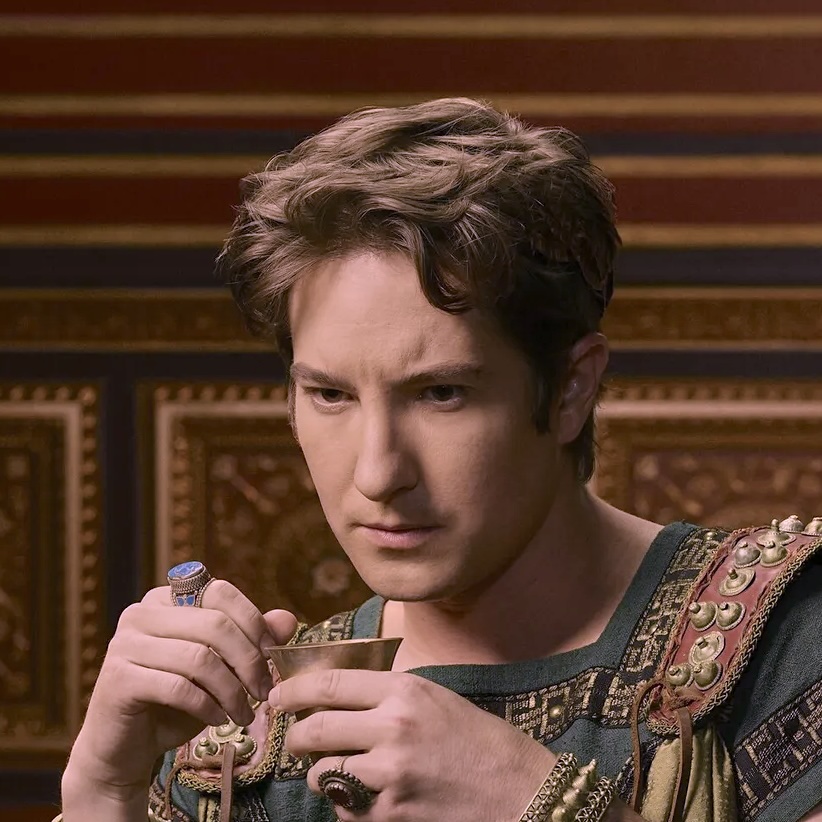

Auspices (Latin: auspicia)
In Roman religion, auspices were signs believed to reveal the will of the gods, often interpreted by observing birds. Roman leaders consulted these signs before major political or military decisions.
Decapolis
Literally, meaning “ten cities.” A federation of ten Greco-Roman cities east of the Sea of Galilee and the Jordan River. The region was known for Greek culture, pagan worship, and strong Roman influence. It served as a center of commerce, learning, and Roman political influence (see Mark 5:20; 7:31).
Kippah
A small head covering traditionally worn by Jewish men as a sign of reverence and awareness of God's presence. It is commonly worn during prayer, study, or daily life, depending on custom.
Hellenists
Jews who adopted the Greek language and cultural practices while maintaining Jewish religious identity. Tensions sometimes arose between Hellenists and more traditional Jewish communities (see Acts 6:1).
Naveh
A fictional city created for The Chosen series, set within the broader Gentile-influenced world of the Decapolis (see above). It serves as a narrative setting for the series' cultural and religious tensions.
Four Philosophies
A reference to four major Jewish groups during the time of Jesus: Pharisees (teachers of the law with strong oral traditions), Sadducees (priestly elites who denied the resurrection of the dead and favored the written law alone), Essenes (separatists focused on purity and prophecy), and Zealots (radicals seeking to overthrow Rome). Each responded differently to Roman rule, shaping the religious climate of the time.
