
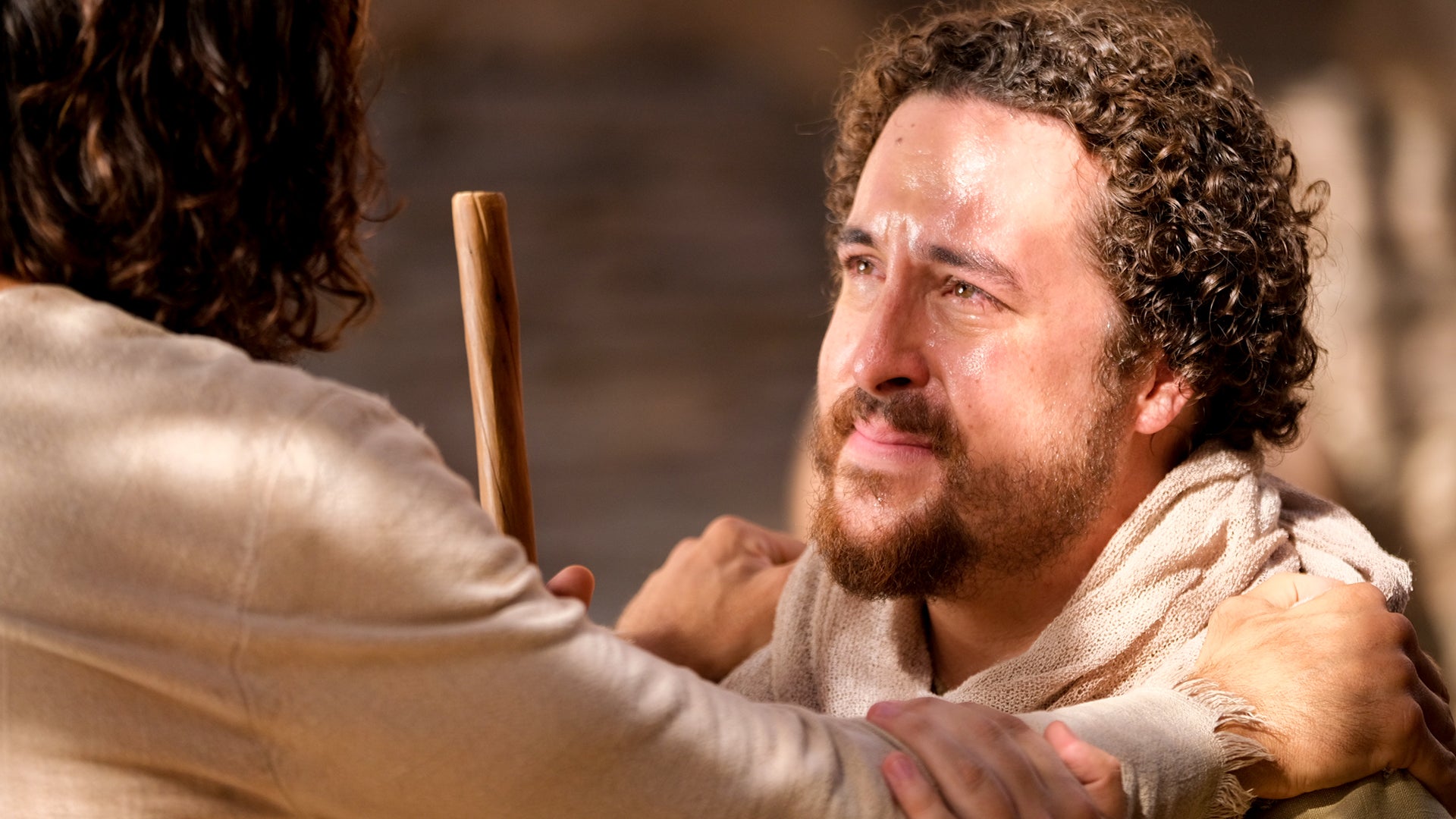
Summary of Episode 2
Episodes 1 and 2 trace the ripple effect of Jesus’ Sermon on the Mount, showing how his words begin to take root in people’s lives. What starts in Episode 1 with conviction and quiet moments of change continues in Episode 2, as those same words lead to personal healing and renewed relationships. This is especially evident in the reconciliation between Matthew and his parents.
At the same time, the tension of Jesus’ growing influence begins to surface. Crowds start camping outside Capernaum, hoping for another chance to hear him or witness a miracle. This makes the Romans uneasy. Though they no longer see Jesus as a military threat, any gathering in a volatile region like Judea can quickly stir unrest.
As people talk about him, it becomes clear that many still misunderstand Jesus’ mission. Some expect him to lead a political revolt, while others seek him solely for physical healing. Even the disciples are still trying to grasp why Jesus came, despite all he’s told them.
In the middle of this confusion, we also get a closer look at the lives of those following him. We see the quiet reconciliation between Matthew and his father, as they both speak honestly about past regrets. There’s growing tension between Simon and Eden; meanwhile, a gentler connection is forming between Thomas and Ramah, whose relationship continues to deepen.
In the second half of the episode, Jesus calls his disciples together and sends them out in pairs on their first mission without him. Many feel afraid or unprepared, but Jesus encourages them to trust God and take the step anyway.
The episode ends with a quiet but deeply moving scene. Little James asks Jesus why he hasn’t been healed. Jesus responds with tenderness and honesty, helping him see how his weakness might still bring glory to God. It’s a powerful moment of trust, identity, and purpose.
Special Note
Because this episode is longer than usual, you might want to consider splitting it across two meetings. You could pause the episode at 35:05 (just after the discussion with Ramah, Tamar, and Mary) and continue with the first set of questions. The following week, briefly review what you watched, finish the episode, and continue the discussion.
This gives your group more space for meaningful conversation while still honoring the depth of the episode. At your second gathering, be sure to start with a short recap of the first part before moving into the next section of the episode and the new questions.
1st Meeting (Episode Time 0:00-35:05):
Basic Questions 1-6 / Advanced Questions 12-13
2st Meeting (Episode Time 35:05-71:12):
Basic Questions 1, 7-11 / Advanced Questions 14-15
Time for Personal Reflection and Summary
After the episode, invite participants to take a few moments of silence to reflect on what they’ve just experienced. Encourage them to think about what resonated with them, what caught them by surprise, or what was unclear. Next, invite them to think about the characters and consider whether they can identify with them or their situations. Encourage them to write down their thoughts or prepare them for a group discussion.
After a few moments of quiet reflection, invite the group to share the moments from the episode that stood out to them. You can use the “Episode Summary” to help you with this. Try to fill in the details you have noticed are missing from the summary. You can also use more creative methods to compose the summary.
Tip: For a more interactive way to summarize the episode, try using a mind map, The 5W1H Method, or other creative approaches. You can find these in the Leader Resources section online.
Some of the series’ concepts and themes may not be clear to all participants. A “Glossary of Terms” is provided to help with this.
Bible References
Matthew 5:23-24
Matthew 10:5-14, 28
Mark 6:7-11
Luke 9:1-6
Psalm 139:14
Job 1:21
Psalm 3
Discussion
In the next section, you will facilitate the group discussion. You can use the questions in their entirety or select those relevant to your group.
What resonated most with you in this episode, and why?
Have you ever hoped for something specific, only to be disappointed when it didn’t happen? What was that experience like for you?
Matthew tries to make things right with his parents after years of distance and regret. Have you ever wanted to repair a relationship but didn’t know where to start? What makes that first step feel so hard?
Matthew doesn’t just apologize, he names what he’s sorry for. Why is that kind of apology harder, but often more meaningful? How do you usually apologize?
One part of Jesus’ teaching has a profound impact on Matthew, and he realizes he needs to make things right with someone. Read Matthew 5:23–24. What do you notice about how seriously Jesus takes repairing relationships? How might that shape the way you approach conflict or broken relationships today?
Tamar holds tightly to something that represents safety for her, even when others don’t understand. Have you ever been in a similar situation? What did it feel like?
Think of a time when someone challenged you to do something beyond your comfort zone. What did you learn about yourself in that experience?
Jesus sends out the disciples in pairs, including Matthew and Simon the Zealot (called Simon Z on the show). What kind of tension might that have caused, and why do you think Jesus paired them?
Jesus reminds his disciples that they are no longer who they were in their pasts.
When Jesus commissions the disciples, several express their doubts and fears. Which of their concerns felt most relatable to you?
Read Luke 9:1–6, where Jesus sends out his disciples. What in Jesus’ instructions feels risky? If you had to go without money, backup plans, or control, what would be hardest for you?
Before leaving, the disciples quote Psalm 3 together. Read that psalm as a group. Which words from this psalm do you need most right now?
Simon Z is being hunted by his former Zealot brothers, who only see who he used to be. How has following Jesus changed the way you view your past? Do you ever feel judged or misunderstood by others for who you used to be?
As more people begin to follow Jesus, many misunderstand what he’s really about; some expect political power, while others just want healing. Where do you see these misunderstandings in people today?
Jesus doesn’t heal Little James, even though he could. Read Psalm 139:14 together. What does this verse suggest about value and purpose, even when something feels incomplete or unresolved?
Psalm 139:14 can help frame a conversation about identity and how God sees us.
When Jesus sends out the disciples in this episode, he tells them to rely entirely on their heavenly Father. In what ways are you learning to depend on God in your own life right now?
Basic Questions
This first set of questions is straightforward and open-ended—great for seekers or those new to faith.
Advanced Questions
These questions are more in-depth and best suited for Christians and more mature participants. Use your discretion to select the ones that best fit your group.
Conclusion
At the close of the discussion time, take a moment to highlight the main ideas that came up during your conversation. The questions in this club meeting touched on the theme of “unmet expectations” and the personal courage it takes to leave what’s familiar and learn to trust God even when we’re not in control.
You can read the quote from the episode below as a final reflection and encouragement. Invite participants to reflect on the message of this episode and consider how it might speak into their own lives.
KEY TAKEAWAY
“But think of the story that you have . . . if I don’t heal you?”
—Jesus
Afterward, you may want to allow a short moment of silence, prayer, or a smooth transition into the next activity.
Gospel Sharing Moment
As you lead discussions during this episode, keep in mind that the gospel message can naturally flow from your conversations. If the moment feels right, take the opportunity to share the Good News and invite participants to respond.
In Episode 2, Jesus sends out his disciples to heal the sick and cast out demons; yet, he does not heal Little James, one of their own. Instead, Jesus assures him that his suffering can still glorify God. This moment reveals a key truth of the gospel: Jesus doesn't promise to fix everything right away, but he does promise to be with us, to use us, and to walk through pain alongside us.
Consider sharing how Jesus has met you in your weakness or used your brokenness in surprising ways. That kind of story can help others see how real and personal his invitation is. If someone wants to know more about what that means, you can use the section "Following Jesus: Your First Step".
Suggested Accompanying Activities
This can be at the beginning or the end of the meeting.
Create random pairs within your group. During the coming week, each pair should reach out to each other once or twice, by calling, messaging, or meeting in person, and share one current joy and one challenge. If it feels natural, they can end by praying briefly for each other, offering a word of encouragement, or sharing a Bible verse.
You can find suggestions for extra games and activities in the Group Activities Library on the Leader Resources page.
Glossary of Terms
Anointing Oil
In Judaism, this sacred oil was used to anoint priests, kings, and holy objects. Anointing symbolized setting something or someone apart for service to God, and the blessing and presence of God were bestowed on the one anointed.

Apostle
The word “apostle” originates from the Greek word “apostolos” meaning “one who is sent” or “messenger.” In Christianity, it refers to someone sent by Jesus to spread his teaching, most often the twelve original disciples, but later also to others, such as the Apostle Paul.
Erev Shabbat
The evening that begins the Jewish Sabbath, starting at sundown on Friday and continuing until sundown on Saturday. Erev means “evening” and Shabbat is the Hebrew word for the Sabbath, a day of rest, worship, and family togetherness in Jewish tradition.
