Summary of Episode 7
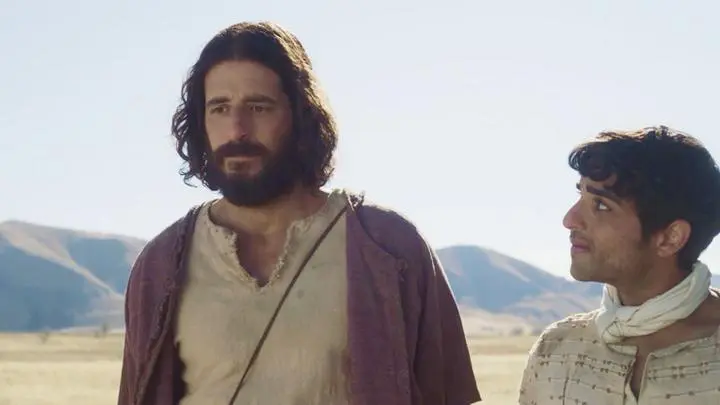
Quintus responds to the crowd gathering during Jesus’ preaching Jesus and his disciples continue their mission, but pressure from the Pharisees and Roman authorities intensifies. While fishing, Simon and Andrew share a moment that reveals how troubled the disciples have become. They know Jesus is taking great risks—especially after the arrest of John the Baptizer—and feel torn between wanting to protect him and recognizing they’re powerless against Rome. Their fears become real when they spot Roman soldiers near the location of Jesus’ upcoming sermon.
Meanwhile, Praetor Quintus Dominus receives a report from Atticus about Jesus’ growing influence and potential danger. Quintus orders that Jesus be summoned for questioning. At the same time, the Pharisees return to Capernaum. Shmuel seeks out the Ethiopian woman Tamar, hoping to use her testimony, and that of the healed leper, as evidence against Jesus.
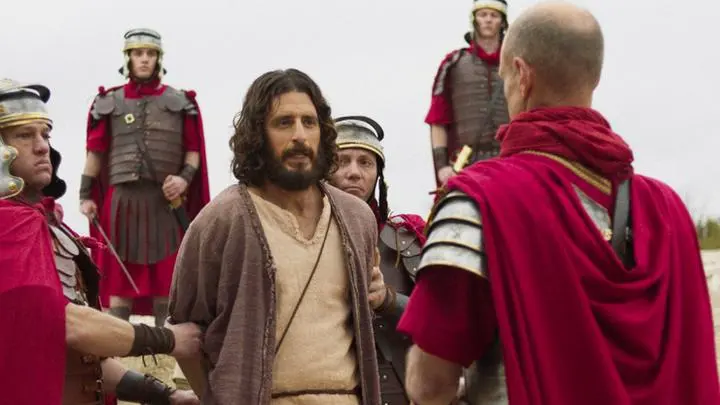
Eventually, Jesus is arrested and brought before Quintus. The disciples argue over what to do. Some want to act, while others prefer to wait as Jesus had instructed. Andrew insists on going to find him, and Philip joins. Along the way, they meet Tamar and the once-paralyzed man, now joyfully preaching in the marketplace.
During the interrogation, Quintus demands that Jesus stop stirring unrest. Jesus makes no such promise, and Quintus offers no guarantee of safety. Still, Jesus is released. Before rejoining the disciples, he withdraws alone to pray. The disciples, moved by his example, ask him to teach them to pray. In the final scene, Jesus asks Matthew to help him begin writing the Sermon.
Special Note: The depiction of Jesus’ brief arrest and Roman questioning in this episode is a creative addition not found in the biblical Gospels. While this scene is fictional, it highlights the rising tension and growing opposition Jesus faced during his ministry.
Time for Personal Reflection and Summary
After the episode, invite participants to take a few moments of silence to reflect on what they’ve just experienced. Encourage them to think about what resonated with them, what caught them by surprise, or what was unclear. Next, invite them to think about the characters and consider whether they can identify with them or their situations. Encourage them to write down their thoughts or prepare them for a group discussion.
After a few moments of quiet reflection, invite the group to share the moments from the episode that stood out to them. You can use the “Episode Summary” to help you with this. Try to fill in the details you have noticed are missing from the summary. You can also use more creative methods to compose the summary.
Tip: For a more interactive way to summarize the episode, try using a mind map, The 5W1H Method, or other creative approaches. You can find these in the Leader Resources section.
Some of the series’ concepts and themes may not be clear to all participants. A “Glossary of Terms” is provided to help with this.
Bible References
- Proverbs 3:5-6
- Luke 6:37
- Matthew 6:5
- Matthew 6:9-13
Discussion
In the next section, you will facilitate the group discussion. You can use the questions in their entirety or select those relevant to your group.
What resonated most with you in this episode, and why?
Have you ever had to work through a disagreement or difficult conversation with a leader or authority figure, like Jesus did with Quintus in this episode? What was that experience like, and how did you respond?
If you had been one of the disciples after Jesus was arrested, would you have found it more natural to take action or to wait as he instructed? Why?
Quintus tells Jesus, “You’re not what I expected.” Think back to your first impressions of Jesus. How have they changed as you’ve gotten to know him more deeply?
Why do you think Jesus provoked such strong reactions from the religious leaders but drew less attention from the Roman officials?
Can you remember a time when you had to face the consequences of a mistake or failure? How did that experience shape you?
Have you ever realized that something you said or did had a big impact, positively or negatively, on someone else? What did that teach you?
Read Matthew 6:5–13. What do you notice about prayer from this passage? What stands out to you, and how could it shape the way you talk with God?
Atticus has witnessed several of Jesus’ miracles, yet he remains cautious and warns Gaius to be careful with him. Why do you think some people—even when witnessing something extraordinary—still find it hard to believe in Jesus?
Andrew is deeply shaken by the news about John the Baptizer. His fear affects how he thinks and acts. Have you ever reacted in an unexpected way because of fear? What does the Bible say about fear?
Consider reading Philippians 4:6–7, 2 Timothy 1:7, Isaiah 41:10, and John 14:27.
In this episode, Jesus teaches the disciples a valuable lesson about prayer. How would you describe that lesson in your own words? How could it influence the way you think about prayer and your conversations with God?
Basic Questions
This first set of questions is straightforward and open-ended—great for seekers or those new to faith.
Advanced Questions
These questions are more in-depth and best suited for Christians and more mature participants. Use your discretion to select the ones that best fit your group.
Conclusion
At the close of the discussion time, take a moment to highlight the main ideas that came up during your conversation. The questions in this club meeting touched on the theme of "every action has consequences."
You can read the quote from the episode below as a final reflection and encouragement. Invite participants to reflect on the message of this episode and consider how it might speak into their own lives.
KEY TAKEAWAY
“Did I not tell you I would be back... You can't just shut down when you are fearful.”
—Jesus
Afterward, you may want to allow a short moment of silence, prayer, or a smooth transition into the next activity.
Suggested Accompanying Activities
This can be at the beginning or the end of the meeting.
- Play a board game with a thematic focus that ends in a final reckoning of the players’ choices or outcomes—something like Monopoly or a horse racing-style game. Use the game as a fun way to reflect on how our decisions have consequences, both big and small.
- You can find suggestions for extra games and activities looking at the Group Activities Library on the Leader Resources page.
Glossary of Terms
S.P.Q.R.
S.P.Q.R. is a Latin abbreviation for Senatus Populusque Romanus, meaning “the Senate and People of Rome.” It wasn’t just a symbol, it was the mark of Rome’s ultimate authority, displayed on coins, buildings, and military banners across the empire. In the episode, Atticus quietly flashes the S.P.Q.R. insignia to the Roman official guarding Quintus’ chambers, a silent signal of his elite status. This small but powerful gesture identifies him as a member of the Cohortes Urbanae. This allows him to bypass protocol, securing a direct meeting with Quintus without needing further explanation.

Wadi Kelt
The Wadi Kelt is a stream or desert valley (wadi) in the West Bank. It originates near Jerusalem and flows into the Jordan River near Jericho, which then empties into the Dead Sea. Some believe it is the stream David envisioned when writing Psalm 23. In the series, this region—evoking the imagery of green pastures and still waters—becomes a setting of tension, as the Pharisees meet there with Shmuel to plot their opposition to Jesus.