Summary of Episode 5
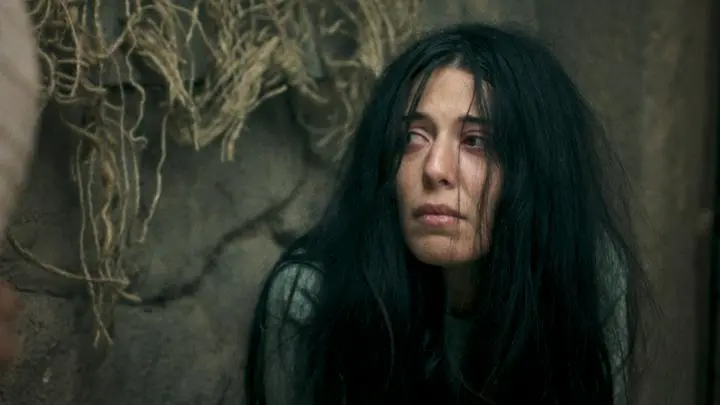
The episode opens with Mary Magdalene picking fruit and quietly reciting Psalms about God’s protection. Her peace shatters when she sees a Roman soldier pass by, triggering terrifying memories from her past. This lingering trauma resurfaces later when a demon-possessed man storms into the camp. Thomas, Matthew, and Rama are afraid. The man calls Mary “Lilith,” her name before she met Jesus. She stands her ground, insisting that she has a new name. When she asks his, the demon attacks. Simon the Zealot tries to stop him but is overpowered. Then Jesus appears and casts out the demons. The man, now calm, tells Jesus his name is Caleb.
Meanwhile, Yeshua (Jesse) is interrogated by the Pharisees about his healing on the Sabbath, but he is more focused on the miracle than the rule. Later, Shmuel tries to reopen the case Nicodemus once closed and seeks allies to stop Jesus. The Roman agent Atticus, still tracking Simon the Zealot, also questions Jesse about what happened.
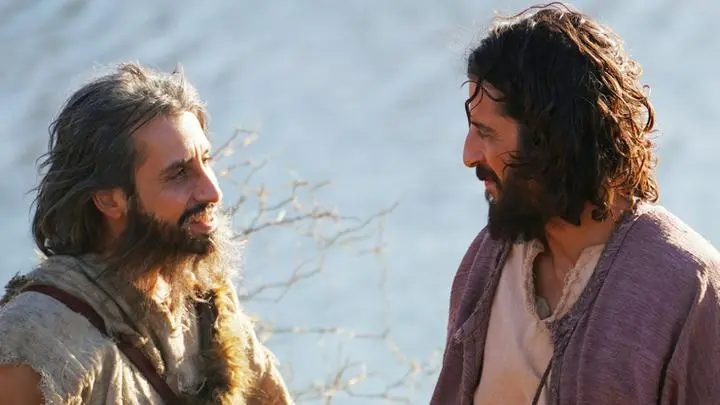
Later, Jesus meets with John the Baptizer, who is preparing to confront Herod. John urges Jesus to reveal his identity more boldly, but Jesus cautions him. Though they differ in approach, they part with mutual respect.
Simon the Zealot is seen training, still imagining a military Messiah. But later, Jesus speaks with him and clarifies that strength and violence aren’t needed in his kingdom. He invites Simon to follow him and symbolically throws Simon’s dagger into the water.
As the day ends, panic spreads as Mary Magdalene is discovered missing. Overwhelmed by painful memories, she flees toward a place from her former life.
Time for Personal Reflection and Summary
After the episode, invite participants to take a few moments of silence to reflect on what they’ve just experienced. Encourage them to think about what resonated with them, what caught them by surprise, or what was unclear. Next, invite them to think about the characters and consider whether they can identify with them or their situations. Encourage them to write down their thoughts or prepare them for a group discussion.
After a few moments of quiet reflection, invite the group to share the moments from the episode that stood out to them. You can use the “Episode Summary” to help you with this. Try to fill in the details you have noticed are missing from the summary. You can also use more creative methods to compose the summary.
Tip: For a more interactive way to summarize the episode, try using a mind map, The 5W1H Method, or other creative approaches. You can find these in the Leader Resources section.
Some of the series’ concepts and themes may not be clear to all participants. A “Glossary of Terms” is provided to help with this.
Bible References
- Psalm 139
- Luke 3:1-20
- Luke 6:7, 11
- Matthew 13:34-35
- Ephesians 6:10-12
Discussion
In the next section, you will facilitate the group discussion. You can use the questions in their entirety or select those relevant to your group.
What resonated most with you in this episode, and why?
In this episode, certain moments or symbols stirred strong emotions in the characters. Do you have something in your life—a scent, sound, place, or experience—that immediately brings back a memory or emotion?
Examples: a smell, a song, a food, a film, a type of weather, or a specific location…
Jesus tells John that some stories will make sense to certain people but not to others. What do you think he meant by that? Have you ever had a moment when something true about Jesus or faith suddenly made sense to you but not to everyone around you?
This episode includes a powerful scene of demonic possession. What are your thoughts about the existence of spiritual forces like demons today? Have you ever experienced something you would describe as spiritual, either positive or unsettling?
In what ways do our culture, upbringing, or traditions shape how we understand things like demons or spiritual warfare?
Simon the Zealot is highly trained and physically strong, yet powerless against the demon-possessed man. After reading Ephesians 6:10–20, how do you see this Scripture connecting to the scene? What does it reveal about the nature of spiritual battle?
Where in this episode do you most clearly see Jesus’ love? What makes that moment stand out to you?
Rama, Mary, and Matthew decide to study Scripture more deeply. What do you think motivates them? What is your reason, or what would you like your reason to be, for reading the Bible?
John the Baptizer is frustrated and tells Jesus he is eager for him to “get to the point.” Have you ever felt like Jesus was acting too slowly in your life or the world around you? What was that like, and how did it affect your faith?
When the demon-possessed man calls Mary “Lilith,” she firmly rejects that name and declares her true name, embracing her new identity. Why do you think knowing who we are in Christ is so important? How does this identity shape how you see yourself and how you live?
When Jesus throws Simon’s dagger into the water, he tells him he has a better weapon. What do you think Jesus meant? How does this moment reflect the kind of change Jesus brings?
Read Hebrews 4:12. This verse describes God’s Word as powerful and sharp. Why do you think Scripture is called a “weapon”? What are some practical ways you can use God’s Word in your own spiritual battles?
Basic Questions
This first set of questions is straightforward and open-ended—great for seekers or those new to faith.
Advanced Questions
These questions are more in-depth and best suited for Christians and more mature participants. Use your discretion to select the ones that best fit your group.
Conclusion
At the close of the discussion time, take a moment to highlight the main ideas that came up during your conversation. The questions in this club meeting touched on the themes of "the spiritual world" and "the supernatural."
You can read the quote from the episode below as a final reflection and encouragement. Invite participants to reflect on the message of this episode and consider how it might speak into their own lives.
KEY TAKEAWAY
“I heard about the miracles, but I never thought I'd actually get to see one.”
–John the Baptizer
Afterward, you may want to allow a short moment of silence, prayer, or a smooth transition into the next activity.
Suggested Accompanying Activities
This can be at the beginning or the end of the meeting.
- Offer participants an opportunity for personal prayer.
- Create a quiet space, either individually or in small groups, where they can reflect and receive prayer for any personal struggles or challenges they may be facing. Be available to pray with them if they are open to it.
- You can find suggestions for extra games and activities looking at the Group Activities Library on the Leader Resources page.
Glossary of Terms
Name
In the Bible, God often gives people new names—like Abraham, Sarah, Israel, Peter, and Paul—as signs of transformation and a new calling. In Jewish culture, a name was deeply tied to someone’s identity. That’s why, in this episode, Mary’s rejection of the name “Lilith”—a name tied to her old life of pain and oppression—is so powerful. She claims her true identity as one redeemed by Jesus, not one defined by her past.

Mishnah
The Mishnah is a written collection of Jewish oral traditions, finalized around the 2nd century CE. It organizes teachings from early Jewish scholars, including figures such as Shammai and Hillel, who lived during the period preceding Jesus’ ministry. Their teachings were highly influential and often debated among rabbis. In this episode, Rabbi Shmuel cites Shammai and Hillel to strengthen his arguments against Jesus, showing how the Pharisees relied on established tradition to judge what they considered heresy.