Summary of Episode 3
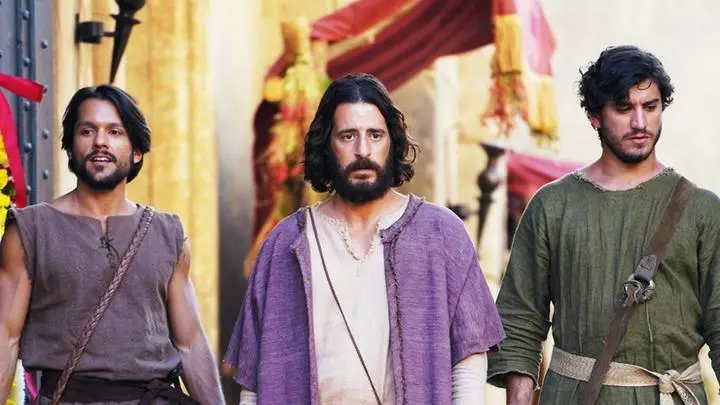
The episode opens with a long line of people waiting to be healed by Jesus. The disciples are responsible for keeping order as the group camps near Caesarea Philippi. While managing the flow, they rest and talk around the campfire. Philip encourages Matthew in his faith, urging him to memorize Scripture and reminding him that God’s presence isn’t always something we feel—it’s accessed through faith. Matthew listens carefully and begins recording testimonies from those who’ve been healed. Later, he shares Philip’s words with Mary and Rama so they can learn them as well.
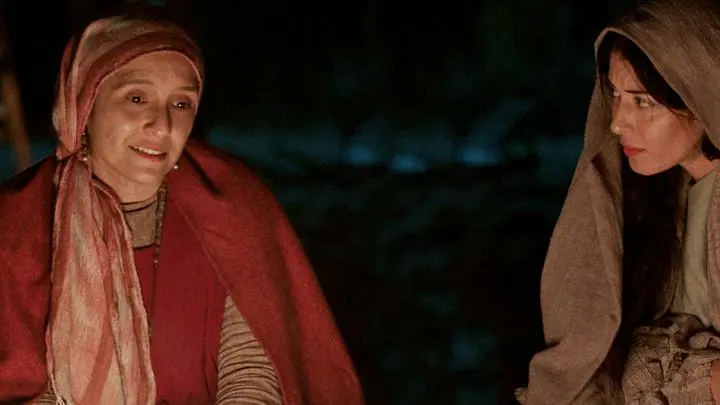
That evening, the disciples gathered to share their thoughts and expectations of the Messiah. Many still imagine a warrior or liberator, shaped by childhood teaching. Their visions don’t always match the man they’re following. Philip reminds them that glory often draws enemies. Mary, Jesus’ mother, joins the conversation and shares tender memories of Jesus as a child—fragile and in need of her care. She also admits her own past doubts and wonders aloud if he truly is who she believes him to be.
The discussion shifts to Jewish identity. They laugh and reflect on what it means to be part of God’s chosen people. Hope rises as they acknowledge that the Messiah they’ve waited for is already with them.
But tension soon breaks the moment. Simon harshly confronts Matthew, questioning his loyalty to their people and whether he’s truly Jewish after betraying his people by working with the Romans. Big James tries to calm the situation as it threatens to boil over.
Just then, when a fight seems inevitable, Jesus returns from healing, exhausted and silent. He quietly wishes them goodnight and walks to his tent. Mary rushes to care for him, and Jesus softly says, “What would I do without you?” The disciples are left speechless, their arguments silenced by the cost Jesus is already bearing.
Time for Personal Reflection and Summary
After the episode, invite participants to take a few moments of silence to reflect on what they’ve just experienced. Encourage them to think about what resonated with them, what caught them by surprise, or what was unclear. Next, invite them to think about the characters and consider whether they can identify with them or their situations. Encourage them to write down their thoughts or prepare them for a group discussion.
After a few moments of quiet reflection, invite the group to share the moments from the episode that stood out to them. You can use the “Episode Summary” to help you with this. Try to fill in the details you have noticed are missing from the summary. You can also use more creative methods to compose the summary.
Tip: For a more interactive way to summarize the episode, try using a mind map, The 5W1H Method, or other creative approaches. You can find these in the Leader Resources section.
Some of the series’ concepts and themes may not be clear to all participants. A “Glossary of Terms” is provided to help with this.
Bible References
- Matthew 7:1-5
- Psalm 139:7-12
- Zechariah 14:1-5
- Luke 4:40
- Matthew 4:24
Discussion
In the next section, you will facilitate the group discussion. You can use the questions in their entirety or select those relevant to your group.
What resonated most with you in this episode, and why?
Around the fire, the disciples shared childhood memories—what they believed, imagined, or hoped for. What’s something you believed when you were younger that later turned out to be untrue or different than expected? What changed your perspective?
How has this episode—or the series so far—helped you imagine what life was like in the 1st century? Are there any struggles the characters face that feel familiar to you? Are there any that feel distant or hard to relate to?
Early in the episode, Philip shares part of Psalm 139 with Matthew. Read Psalm 139:1–10. How do you understand Philip’s words that “God is everywhere”? What does this truth mean for your everyday life?
Read Ephesians 4:32 and Colossians 3:13. What do these verses reveal about forgiveness? How do our choices to forgive—or not forgive—shape our lives and relationships?
Forgiveness can bring healing, peace, and restoration, while refusing to forgive often leads to bitterness, hurt, and broken relationships. Consider discussing why forgiveness is not just a good idea, but something Jesus says is essential for those who’ve received God’s forgiveness.
In a single, intense moment, Simon declares that he will never forgive Matthew. How do you think Matthew felt at that moment? If you were in his place, how might you have responded?
In the final scene, Jesus returns exhausted from healing people all night, while the disciples are busy arguing. What stood out to you in that moment? How might that scene challenge or inspire the way we live today?
Around the fire, the disciples shared honest reflections and deep questions about God, life, and faith. What’s a personal question you’ve been thinking about lately in any of those areas? Or maybe a personal story you would like to share with the group?
See the suggested campfire activity in the Suggested Accompanying Activities for creating this same atmosphere.
Little James worries that some people follow Jesus only for what he does, not for who he is. When you share your faith, what comes more naturally: talking about who Jesus is or what he’s done in your life? How could you grow in sharing both, so others see a fuller picture of the gospel?
At the end of the episode, Jesus’ mother Mary washes his feet, foreshadowing what he will later do for his disciples in the upper room (John 13:3–17). What emotions did this scene stir in you? Do you have a personal experience related to this? Share it if you feel comfortable.
In the episode, we see how time together and honest conversations helped the disciples grow in their faith. What helps you grow or what’s something new you’d like to try? What would help you make that a regular part of your life?
Basic Questions
This first set of questions is straightforward and open-ended—great for seekers or those new to faith.
Advanced Questions
These questions are more in-depth and best suited for Christians and more mature participants. Use your discretion to select the ones that best fit your group.
Conclusion
At the close of the discussion time, take a moment to highlight the main ideas that came up during your conversation. The questions in this club meeting touched on the theme of "each of us has a story."
You can read the quote from the episode below as a final reflection and encouragement. Invite participants to reflect on the message of this episode and consider how it might speak into their own lives.
KEY TAKEAWAY
“Sometimes, I feel like...like I’m living someone else’s life.”
—Andrew
Afterward, you may want to allow a short moment of silence, prayer, or a smooth transition into the next activity.
Gospel Sharing Moment
As you lead discussions during this episode, keep in mind that the gospel message can naturally flow from your conversations. If the moment feels right, take the opportunity to share the Good News and invite participants to respond.
In Episode 3, Jesus quietly tends to the suffering while his disciples argue and miss the heart of his mission. The contrast is striking: self-interest versus self-giving love. It reminds us that Jesus came not just to teach but to rescue—to offer hope, healing, and a whole new way of life.
You might consider sharing a personal story about a time when you realized your own priorities were out of line with Jesus’ example. His invitation isn’t just to observe him—it’s to follow him. Moments like this can help others relate and see their own need for the Gospel.
If someone wants to know more about what that means, you can turn to the section "Following Jesus: Your First Step" at the end of this guide. It explains how to begin a relationship with Christ—and how to respond to his call.
Suggested Accompanying Activities
This can be at the beginning or the end of the meeting.
- If the weather allows, try hosting the discussion time outdoors around a campfire—or at least by candlelight—to create an atmosphere similar to the one in the episode. The setting can help participants feel more connected and reflective.
- Invite your group to take on a “challenge” this week: intentionally listen to someone, really listen, and be open to their story. As a leader, you can introduce the concept of active listening and explain what it means to be fully present in a conversation. At your next meeting, check in with the group. Ask how it went and what they learned from the experience.
- You can find suggestions for extra games and activities looking at the Group Activities Library on the Leader Resources page.
Glossary of Terms
Shema
Shema, meaning “hear,” is one of the central prayers in Judaism, declaring faith in the one true God. Jewish families recite the Shema in the morning, evening, and during services. The prayer also instructs parents to teach God’s word to their children, which is why Jewish children often memorize it.

Jesus as the Carpenter
The Bible describes Jesus as a craftsman, not specifically a carpenter, as is often assumed. While it is traditionally believed that Jesus worked with wood, the Greek word used for his occupation, “tekton,” can also mean builder, referring to someone who worked with stone or other materials. What is clear, however, is that Jesus was a tradesman, not a farmer or fisherman like some of his disciples.
Capernaum
Capernaum was originally a fishing village located on the northwest shore of the Sea of Galilee. It was home to many tax collectors who collected taxes from the fishing industry. The tax collector Matthew, along with disciples Peter, Andrew, James, and John, also lived there.