
Summary of Episode 8
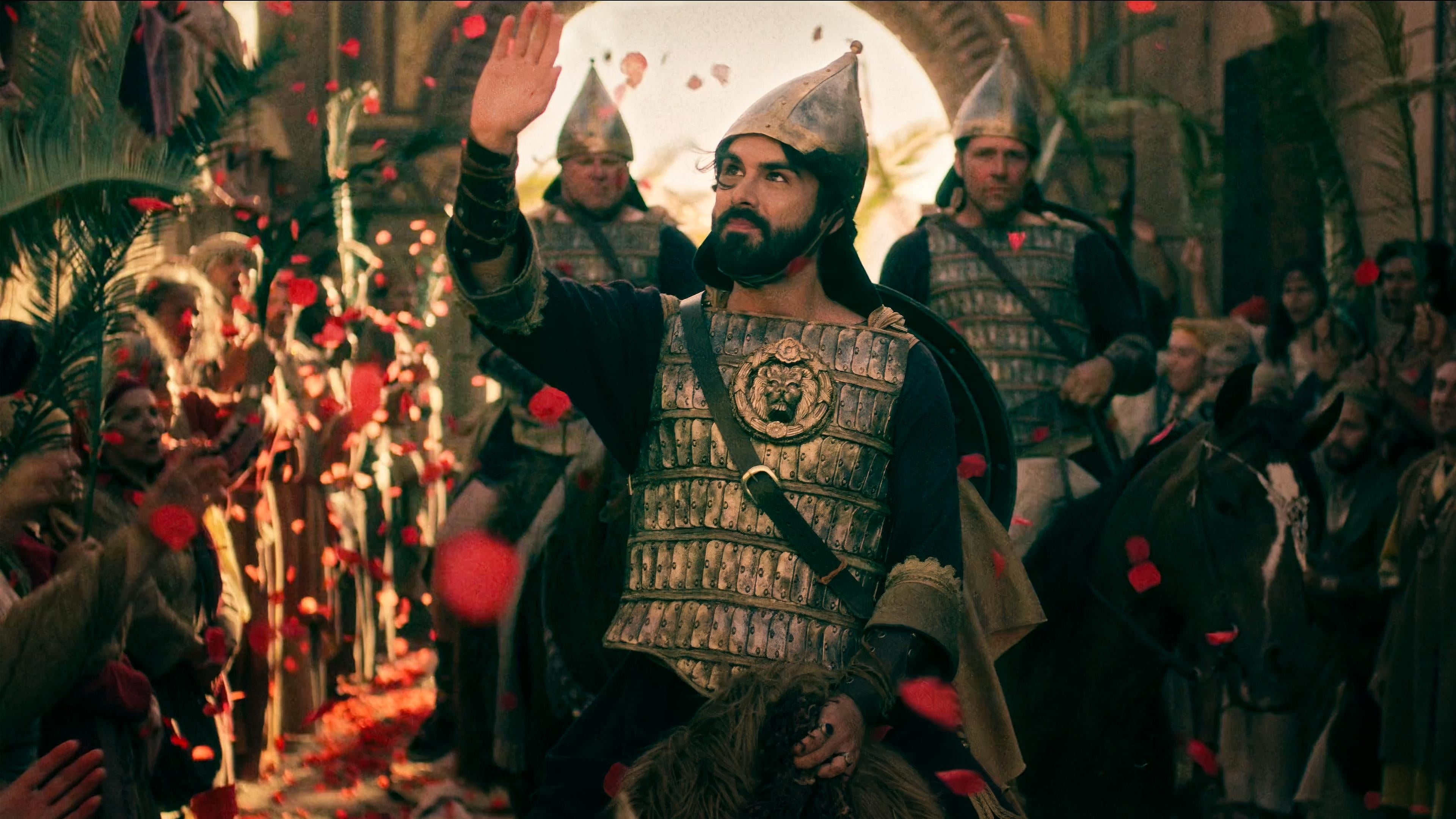
The episode opens with a glimpse into Israel’s past, as King David enters Jerusalem to shouts of “Hosanna” during Passover. With his family, he prepares a sacrificial lamb and speaks of obedience, sacrifice, and hope. A simple bridle is introduced, a symbol that quietly connects David’s line to what is about to unfold generations later.
In the present, Passover approaches, and Jerusalem fills with pilgrims. Stories about Jesus spread quickly. Some speak with wonder about his miracles, especially the raising of Lazarus, while others accuse him of deception or sorcery. As excitement grows among the crowds, concern rises among political and religious leaders. Pilate worries about unrest, Herod grows curious and uneasy, and the Sanhedrin debates how to protect their power, with Caiaphas beginning to move toward decisive action.
In Bethany, Shmuel and Yussif meet with Jesus and question him about his intentions. They hope for a Messiah who will restore David’s kingdom and confront Rome, but Jesus speaks instead about humility, love, and a kingdom shaped by service. He challenges their expectations, pointing to a different kind of authority and glory.
Mary of Bethany responds to Jesus in a deeply personal way. She purchases costly perfume and anoints his feet, an act that draws sharp criticism from Judas and the religious leaders. Jesus defends her, recognizing her action as preparation for his burial, a moment that further divides those watching him.
As the episode closes, Jesus sends his disciples to find a young donkey, fulfilling the words of the prophet Zechariah. His mother brings the bridle seen earlier, and Jesus mounts the donkey, beginning his ride toward Jerusalem with his disciples.
Time for Personal Reflection and Summary
After the episode, invite participants to take a few moments of silence to reflect on what they’ve just experienced. Encourage them to think about what resonated with them, what caught them by surprise, or what was unclear. Next, invite them to think about the characters and consider whether they can identify with them or their situations. Encourage them to write down their thoughts or prepare them for a group discussion.
After a few moments of quiet reflection, invite the group to share the moments from the episode that stood out to them. You can use the “Episode Summary” to help you with this. Try to fill in the details you have noticed are missing from the summary. You can also use more creative methods to compose the summary.
Tip: For a more interactive way to summarize the episode, try using a mind map, The 5W1H Method, or other creative approaches. You can find these in the Leader Resources section online.
Some of the series’ concepts and themes may not be clear to all participants. A “Glossary of Terms” is provided to help with this.
Bible References
Primary Verses
Exodus 12:1–14
Psalm 118:25–26
Zechariah 9:9
John 6:67–68; 11:47–12:18; 13:1, 34–35
Supporting Verses
2 Samuel 10:1–19; 12:26–31
1 Chronicles 3:1; 19:1–19; 20:1–3
Matthew 21:1–9; 26:6–13
Mark 11:1–10; 14:1–9
Luke 19:28–38
Discussion
In the next section, you will facilitate the group discussion. You can use the questions in their entirety or select those relevant to your group.
What resonated most with you in this episode, and why?
Almost everyone traveled to Jerusalem for Passover. Do you or your family have a place, tradition, or event you return to regularly? What makes it meaningful to you?
At the beginning of the episode, we hear the Passover story. What stood out to you or caught your attention as you listened?
Johanna spends much of her money on palm branches, and Mary of Bethany spends a year’s wages on perfume. What do you think motivates someone to act in such a costly way?
When Mary uses the expensive oil, Judas criticizes her and calls it irresponsible. What tensions do you notice in that moment between money, generosity, and motive?
Optional follow-up: Play “the Scent of Sacrifice” from the Accompanying Activities for this episode.
Just before Shmuel leaves Jesus and his disciples at the meal, Jesus tells him, “I’m sorry, but I cannot help you.” Based on this episode, what seems to get in the way for people who struggle to accept the kind of path Jesus offers?
This question may open a natural Gospel-sharing conversation.
Read John 12:12–15 together. What do you notice about how the crowd welcomes Jesus, and how Jesus chooses to enter the city?
Just before entering Jerusalem, Peter says, “Lord, where else would we go?” As you think about Jesus, what makes you want to move closer to him, or what still holds you back?
Read John 13:34–35 together. Jesus ties love for others directly to how the world will recognize his followers. Who have you seen love others in a way that reminds you of Jesus, and what effect did it have on the people around them?
Claudia asks Johanna whether her belief would change if it came at a real personal cost. When does following Jesus test your faith, especially when it affects your comfort, security, or sense of control?
Read Zechariah 9:9 together. What stands out to you about the kind of king this verse describes?
After everything you’ve seen this season, where do you find yourself with Jesus right now?
Basic Questions
This first set of questions is straightforward and open-ended—great for seekers or those new to faith.
Advanced Questions
These questions are more in-depth and best suited for Christians and more mature participants. Use your discretion to select the ones that best fit your group.
Conclusion
At the close of the discussion time, take a moment to highlight the main ideas that came up during your conversation. The questions in this club meeting touched on the theme of “who Jesus is” and what he is truly worth in our lives.
You can read the quote from the episode below as a final reflection and encouragement. Invite participants to reflect on the message of this episode and consider how it might speak into their own lives.
KEY TAKEAWAY
“Lord…where else would we go? You alone have the words of eternal life.”
—Peter to Jesus
Afterward, you may want to allow a short moment of silence, prayer, or a smooth transition into the next activity.
Gospel Sharing Moment
As you lead discussions during this episode, keep in mind that the gospel message can naturally flow from your conversations. If the moment feels right, take the opportunity to share the Good News and invite participants to respond.
In Episode 8, people respond to Jesus in very different ways as his influence grows. Some offer praise and costly devotion, others hold back, criticize, or try to control the situation. Mary gives freely, Judas resists, and leaders weigh the risks of losing power. This reflects the heart of the gospel: Jesus invites us to come to him not through control, certainty, or self-protection, but through trust, surrender, and willingness to follow him as he is.
If the moment feels right, you may briefly share how you first began to follow Jesus, especially when it involved cost, uncertainty, or letting go of control, and what you discovered about who he is. If participants want to explore that step further, invite them to the “Following Jesus: Your First Step” section of this website (linked below).
Following Jesus: Your First StepSuggested Accompanying Activities
This can be at the beginning or the end of the meeting.
The Scent of Sacrifice. Place several strong scents in small cups and invite volunteers to identify them by smell. End with perfume or essential oil and remind the group that Mary poured out perfume worth about a year’s wages. Ask everyone to reflect on this question quietly: What is something valuable you would find difficult to give up, even for something you deeply believed in?
Donkey Search (for younger groups). Hide a small toy donkey, picture, or clue somewhere in the room. Give the kids a few simple clues and let them search together, like Matthew and Simon Z searched for the donkey Jesus asked them to find. Afterward, briefly ask: How do you think they felt being trusted with such an unusual job?
Guess the True Value. Show the group pictures of several items with very different prices, and have them guess what each one is worth. Examples could include a pair of sneakers, a concert ticket, a phone, a designer bag, a rare trading card, or a bottle of expensive perfume. Reveal the actual prices at the end.
You can find suggestions for extra games and activities in the Group Activities Library on the Leader Resources page.
Glossary of Terms
Hosanna
A Hebrew phrase meaning “save, please” or “save us now.” In Scripture, it functions both as a cry for God’s help and as a shout of praise, often used in worship and public celebration.

Anointing the feet with oil
A sign of honor, care, and hospitality in the ancient world, especially after travel. Oil was also used in burial preparations, so anointing could express both respect in life and readiness for death. This practice is described in John 12:3.
The sacrifice of the Lord’s Passover
The Passover sacrifice refers to the lamb eaten during the Passover meal, remembering Israel’s deliverance from slavery in Egypt. According to Exodus 12, the lamb’s blood marked Israelite homes so they would be spared from judgment.
Unleavened bread
In the Passover story (Ex. 12), Israel left Egypt so quickly that their dough could not rise. Because of this, unleavened bread, or bread made without yeast, became a lasting symbol of urgency and remembrance.
Ketuvim / Qoheleth
The third section of the Hebrew Bible, alongside the Torah (Law) and Nevi’im (Prophets), is known as the Ketuvim, meaning “Writings.” Qoheleth is the Hebrew name for Ecclesiastes, a book in this section that reflects on wisdom, life, and human limits.
Denarii
A denarius was a common Roman silver coin, roughly equal to one day’s wage for a laborer. References to many denarii indicate a significant financial cost, not a small amount.