
Summary of Episode 4
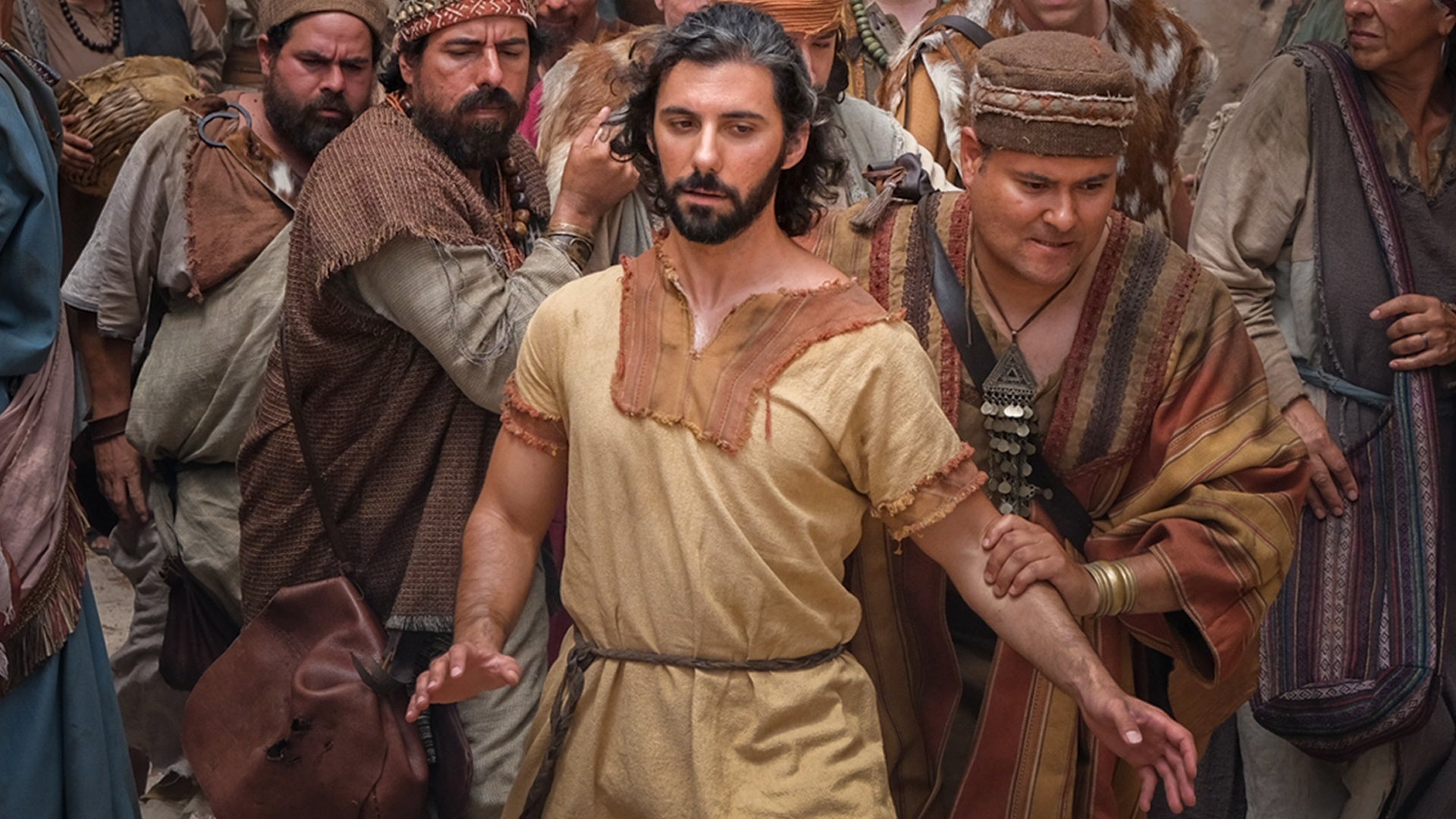
Episode 4 follows the disciples as they return from their mission and begin facing the quieter challenges waiting at home. It opens with memories of their journey, their early surprise at the miracles they performed, and the growing joy that followed.
Simon returns to Capernaum tired and distant. Eden has rearranged their home, hoping for a fresh start, but he barely notices. She longs for connection, while he focuses on food and rest. The gap between them widens, and when a noisy crowd gathers outside, the tension finally breaks. Later, Simon confides in Gaius about the strain at home and his frustration with Jesus, who feels absent when Simon needs him most.
Elsewhere in the city, Yussif learns that the cistern outside the synagogue has been contaminated. Roman officials insist the synagogue pay for repairs. Yussif agrees and turns to Jairus for help, offering support through his family’s construction contacts in Jerusalem.
Their conversation shifts to Jesus. Shmuel has asked for a report on Jesus’ teaching, and Jairus admits he has read Yussif’s record of the Sermon on the Mount. He wonders if Jesus could be the Messiah, but that small hope is shaken when his daughter becomes seriously ill. He worries God might be punishing him, and by the end of the episode, that fear grows heavier.
Eden’s story continues as she meets Veronica, who shows her a hidden spring with clean water. As they wash clothes, Eden notices Veronica’s garments are stained with blood. Veronica explains she has suffered from constant bleeding for twelve years, leaving her cut off from the community and without resources. When Eden asks how she endures, Veronica says she still holds a small hope for healing. Later, she is publicly shamed when her condition is noticed, yet she keeps that fragile hope alive.
Time for Personal Reflection and Summary
After the episode, invite participants to take a few moments of silence to reflect on what they’ve just experienced. Encourage them to think about what resonated with them, what caught them by surprise, or what was unclear. Next, invite them to think about the characters and consider whether they can identify with them or their situations. Encourage them to write down their thoughts or prepare them for a group discussion.
After a few moments of quiet reflection, invite the group to share the moments from the episode that stood out to them. You can use the “Episode Summary” to help you with this. Try to fill in the details you have noticed are missing from the summary. You can also use more creative methods to compose the summary.
Tip: For a more interactive way to summarize the episode, try using a mind map, The 5W1H Method, or other creative approaches. You can find these in the Leader Resources section online.
Some of the series’ concepts and themes may not be clear to all participants. A “Glossary of Terms” is provided to help with this.
Bible References
Leviticus 13:45–46
Leviticus 15:25-30
Matthew 6:9–13
Discussion
In the next section, you will facilitate the group discussion. You can use the questions in their entirety or select those relevant to your group.
What resonated with you most in this episode, and why?
What’s something small or routine in your life that would cause real disruption if it stopped working, like the broken cistern in Capernaum?
When the disciples return, they’re surprised by what happened through them. Have you ever said yes to something that felt risky, and only later realized how much it shaped you? Can you share an example?
The disciples respond in various ways after returning from their mission. Some were excited, others were quieter or unsure. Why do you think the same experience affects people so differently?
Consider discussing what brought them joy, what left them confused, and what made them afraid.
Tamar and Mary Magdalene gently tell Zebedee that the oil he made can’t be used. Why can giving or receiving feedback feel uncomfortable, even when it’s meant to help?
Simon and Eden both feel unseen and misunderstood in this episode. Have you ever walked through something painful when it felt like no one really noticed or understood? If you’re comfortable sharing, could you tell the group what would have helped you most in that season?
Throughout the episode, Veronica’s condition leaves her cut off from others because of what was considered “unclean.” How do you think that would have shaped her daily life? Where do you see something similar in our world today?
For a brief definition of “ritual impurity,” see the Glossary of Terms.
Due to her illness, Veronica had been pushed to the margins of society for many years, and it would have been easy for her to give up. Instead, her attitude shows perseverance, determination, and hope. In what ways can her story inspire you in your own life?
Serving others can be deeply rewarding, but also exhausting, as we witnessed in the reactions of the disciples upon their return. What helps you keep going when you feel worn out or unseen in your efforts? Have you ever had a moment when you wanted to give up, but something or someone encouraged you to keep going?
Veronica is going through a long journey of pain and waiting. Read Isaiah 40:29-31, where it says God gives strength to the weary and renews those who trust in him. How can these words encourage you when healing or hope still feels far away?
The disciples are learning to rely on truth, not just outcomes. Read Psalm 13. How do the psalmist’s questions, frustrations, and final words help us deal with what feels unseen or unresolved?
Basic Questions
This first set of questions is straightforward and open-ended—great for seekers or those new to faith.
Advanced Questions
These questions are more in-depth and best suited for Christians and more mature participants. Use your discretion to select the ones that best fit your group.
Conclusion
At the close of the discussion time, take a moment to highlight the main ideas that came up during your conversation. The questions in this club meeting touched on the themes of “frustration, discomfort, and the inner struggles of faith”—a faith that endures even when things aren’t going well or when walking through difficult seasons.
You can read the quote from the episode below as a final reflection and encouragement. Invite participants to reflect on the message of this episode and consider how it might speak into their own lives.
KEY TAKEAWAY
“If people knew something that would help, I wouldn’t want them to withhold it.”
—Veronica
Afterward, you may want to allow a short moment of silence, prayer, or a smooth transition into the next activity.
Suggested Accompanying Activities
This can be at the beginning or the end of the meeting.
Simon doesn’t notice how much care and effort Eden has put into their home before his return. Try a quick observation game. To do so, one player steps out while the others change five things in the room. When the player returns, their task is to identify what has changed.
Organize a “Blind Tasting.” Prepare several kinds of foods or drinks, choose four volunteers, and blindfold them. Give each a small sample to taste and guess what it is based only on flavor. For extra fun, include a few surprises—not every taste should be pleasant!
Host a The Chosen Club sleepover and spend the evening watching and discussing Episodes 4 and 5 (“Clean”) together.
Glossary of Terms
Ritual impurity
In the Old Testament, becoming “unclean” was a normal part of life, not a sin. It often came through everyday experiences connected to loss of life, such as bleeding, illness, or contact with death. This impurity was temporary and required time and washing before someone could return to worship. Impurity could spread through contact, which meant people with long-term conditions were often kept at a distance. While Scripture did not label them as sinful or cursed, over time, they were frequently treated that way, leading to isolation from both community and worship.

Animism
The belief that spirits or spiritual forces dwell within parts of nature (such as trees, rivers, mountains, or animals), and can influence human life. This worldview contrasts with the Bible's teaching in Genesis 1:1, where one Creator stands distinct from creation (see also Romans 1:25).
Bleeding and ritual impurity
In Jewish law, a woman is ritually unclean during menstruation and counts seven clean days afterward before immersing in a mikveh (ritual bath) to become pure again. Ongoing or abnormal bleeding prevented completion of this process, leaving a woman in continual impurity and excluded from temple worship and community life.
The cistern near the synagogue
An underground pit or reservoir used to collect and store rainwater. In ancient Israel, cisterns were often built near homes, public spaces, or synagogues to supply water for daily needs and ritual cleansing. Contamination of a cistern could disrupt both community life and religious practices.
Sanhedrin
The Sanhedrin was an assembly of Jewish leaders — rabbis, scholars, and priests — that served as the highest religious and judicial authority in ancient Israel. It settled legal disputes, interpreted Jewish law (halakha), and resolved religious questions, fulfilling both civil and spiritual functions. There were two types: the Great Sanhedrin in Jerusalem with 71 members, and Lesser Sanhedrins of 23 members that operated in individual towns.
Decrees against false teachers
Actions or rulings taken by Jewish leaders to protect the community from false prophets or misleading teachings. See Deuteronomy 13 and 18.