
Summary of Episode 1
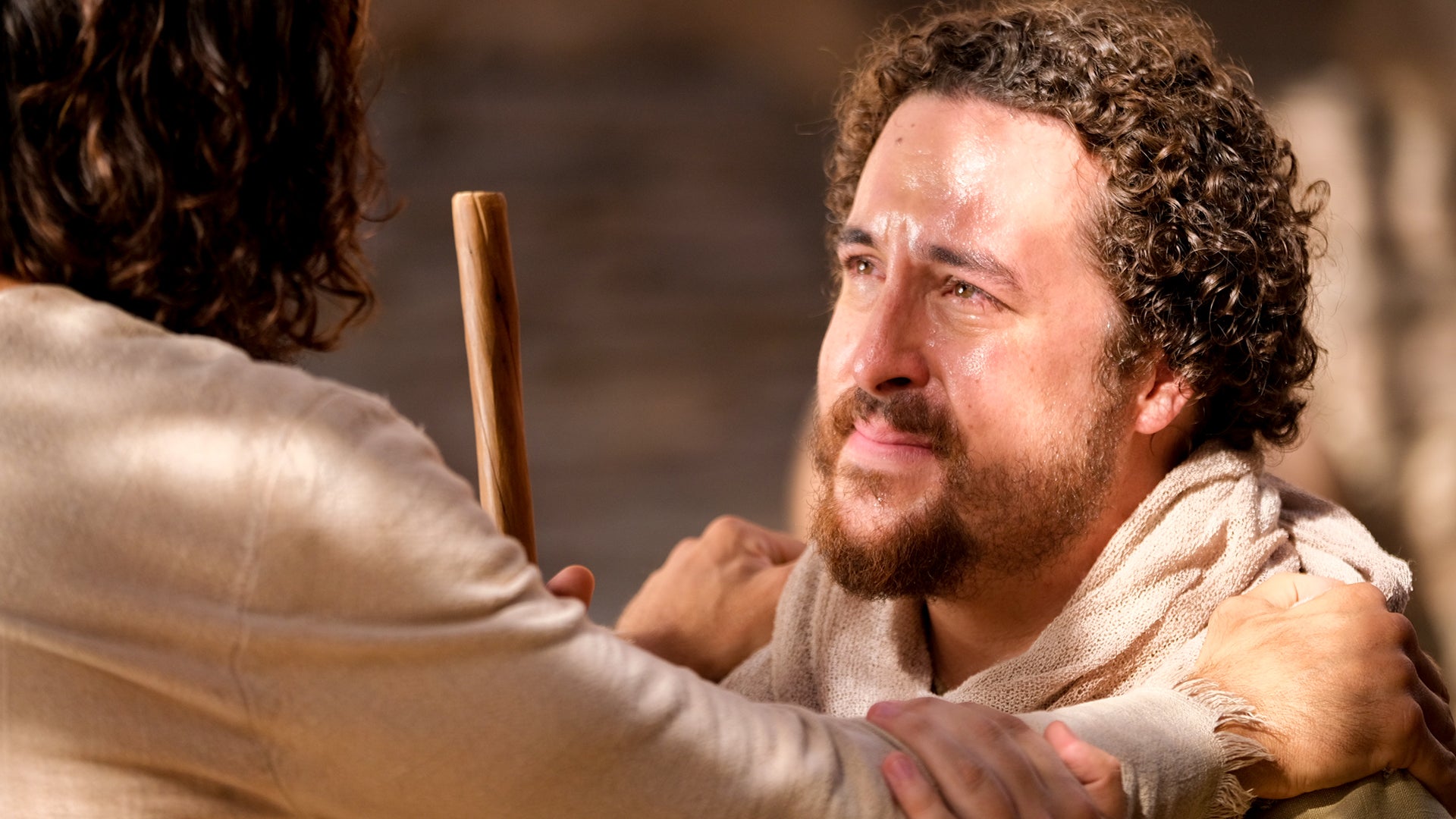
The episode opens with a flashback to Matthew’s past as a tax collector. His parents rejected him for working with the Romans, even after he had protected his father. It is a painful memory, yet the episode closes with Matthew returning home. His father opens the door and calls him “son,” a change that later episodes will explain.
We also see Judas drawn to Jesus’ teaching and choosing to join the group. His hopes for the future are clear, yet Jesus reminds him that following means becoming like him and giving praise. (Judas’ name means “to praise Yahweh.”)
Mary Magdalene, Ramah, and Tamar meet Joanna, a wealthy woman mentioned in Luke 8:3. Moved by the Sermon on the Mount, she hopes to meet Jesus and brings a costly gift. She also shares that her husband serves in Herod’s court, and that she carries a message from John the Baptizer, who is imprisoned.
Jesus allows Andrew to visit John, knowing how the imprisonment has weighed on him. Through Joanna’s help, Andrew finds John and shares news of Jesus’ teaching. John is encouraged and points to Isaiah 61:1–4, trusting that Jesus will fulfill it in time.
Back in Capernaum, Yussif meets with Jairus, the new synagogue administrator. Yussif explains that Shmuel has requested a report on Jesus’ teachings. Seeing his concern, Jairus hints at a way to slow the process until tensions settle.
The Sermon on the Mount lingers over everything. As the disciples return home, they feel the weight of Jesus’ words inside families that have not changed. Simon and Eden feel strain. Andrew is unsettled. Life looks the same, yet something in them has shifted.
Time for Personal Reflection and Summary
After the episode, invite participants to take a few moments of silence to reflect on what they’ve just experienced. Encourage them to think about what resonated with them, what caught them by surprise, or what was unclear. Next, invite them to think about the characters and consider whether they can identify with them or their situations. Encourage them to write down their thoughts or prepare them for a group discussion.
After a few moments of quiet reflection, invite the group to share the moments from the episode that stood out to them. You can use the “Episode Summary” to help you with this. Try to fill in the details you have noticed are missing from the summary. You can also use more creative methods to compose the summary.
Tip: For a more interactive way to summarize the episode, try using a mind map, The 5W1H Method, or other creative approaches. You can find these in the Leader Resources section online.
Some of the series’ concepts and themes may not be clear to all participants. A “Glossary of Terms” is provided to help with this.
Bible References
- Numbers 6:24-26
- Matthew 5:21-24, 38-45
- Matthew 6:25-33
- Matthew 7:12, 24-27
- Luke 8:1–3
Discussion
In the next section, you will facilitate the group discussion. You can use the questions in their entirety or select those relevant to your group.
What resonated most with you in this episode, and why?
What’s one memory, funny or painful, that comes to mind when you think of “home”? Why do you think this memory has stayed with you?
Matthew comes home changed, but his parents haven’t changed with him. Have you ever returned to a place or relationship after changing, and it didn’t feel the same? Share an example.
For example, after camp or a year at university.
Ramah wonders why Joanna would give such an expensive gift. Have you ever found it hard to accept something you didn’t earn, like a kind word, a second chance, or someone’s help? Why is it hard to accept something you didn’t pay for?
Jesus’s sermon begins to shape the disciples from the inside out. We see this as both Andrew and Matthew apologize. What stood out to you about how the disciples are starting to act differently after hearing Jesus teach?
Some of Jesus’ words in the Sermon on the Mount go against what is normal in the world today. Was there anything he said in this episode that stood out or challenged you?
Sometimes we face things in life that we know are right or important, but we avoid them because they’re difficult. What keeps us from taking the first step?
As Jesus teaches in the Sermon on the Mount, he speaks directly to worry, fear, and what people build their lives around. Read Matthew 6:25–33 together. What words or ideas stand out to you as you hear Jesus speak here?
This episode shows how following Jesus affects everyday life, especially at home. What is hardest for you about following the teachings of Jesus at home?
John the Baptizer tells Andrew that every sermon has something “just for you.” Was there a sermon or message you heard recently that spoke directly to you? Share an example if you can.
Jesus blesses the disciples with words from Numbers 6:24-26. Read that passage together. If Jesus said those words to you, how might they influence your relationships or decisions this week?
Basic Questions
This first set of questions is straightforward and open-ended—great for seekers or those new to faith.
Advanced Questions
These questions are more in-depth and best suited for Christians and more mature participants. Use your discretion to select the ones that best fit your group.
Conclusion
At the close of the discussion time, take a moment to highlight the main ideas that came up during your conversation. The questions in this club meeting touched on the theme of “courage to go against the current,” and how God’s Kingdom often feels like an “upside-down world” that reshapes our expectations and calls us to live differently.
You can read the quote from the episode below as a final reflection and encouragement. Invite participants to reflect on the message of this episode and consider how it might speak into their own lives.
KEY TAKEAWAY
“Everything backwards—the poor, the grieving, the meek, all elevated!”
—Joanna to John the Baptister
Afterward, you may want to allow a short moment of silence, prayer, or a smooth transition into the next activity.
Suggested Accompanying Activities
This can be at the beginning or the end of the meeting.
Before you start the episode, briefly recap the main events of Season 2 to help everyone remember the story and understand the context.
Inspired by Rabbi Yussif’s letter and how he eventually came back to it, ask each person to write a personal letter about something that “keeps them up at night”—a thought, doubt, question, or dream. Have them seal their letters and hand them to you for safekeeping. At the end of the series, return the letters so participants can look back and see how their perspective or faith may have grown.
You can find suggestions for extra games and activities in the Group Activities Library on the Leader Resources page.
Glossary of Terms
Adonai
A Hebrew word meaning “Lord” or “My Lord.” In Judaism, it is one of the many names used for God, especially in prayer and religious texts.

Abba
The word Matthew uses to address his father. In Aramaic, “Abba” is an affectionate and respectful term for “father,” similar to the English term “dad.”
Mezuzah
The word means “doorpost” in Hebrew and refers to a small case attached to the doorpost of Jewish homes. Inside is a parchment with verses from Deuteronomy (6:4–9; 11:13–21), including the Shema. As a sign of reverence for God’s commandments, many Jews touch the mezuzah when entering or leaving, often kissing their fingers after.
Sitting shiva
Sitting shiva is the seven-day mourning period observed after the death of a close family member.
Rabbi Hillel
A respected Jewish teacher and scholar known for his gentleness, patience, and compassionate wisdom. One of his most famous sayings is, “What is hateful to you, do not do to your neighbor,” a foundational principle in Jewish ethics.

Synagogue
A synagogue is a Jewish house of prayer that serves not only for worship services but also for social gatherings and study. Synagogues outside Israel traditionally face east, toward Israel; within Israel, synagogues face Jerusalem.