Summary of Episode 1
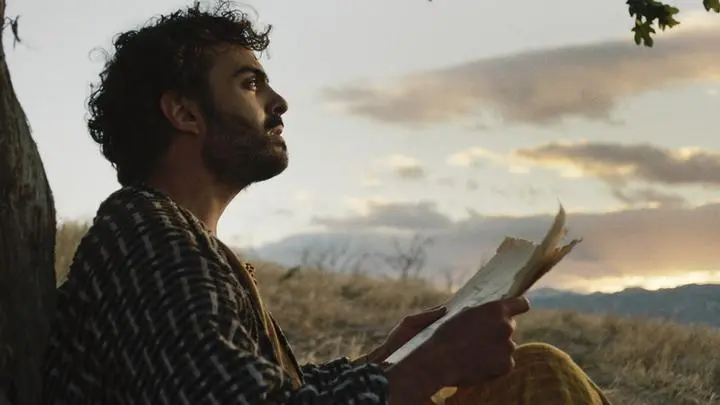
The episode opens in the future as John gathers stories from the other disciples, Mary Magdalene, and Mary (Jesus’ mother) about their first encounters with Jesus. He is preparing to write his own account of Jesus’ ministry, but struggles with where to begin.
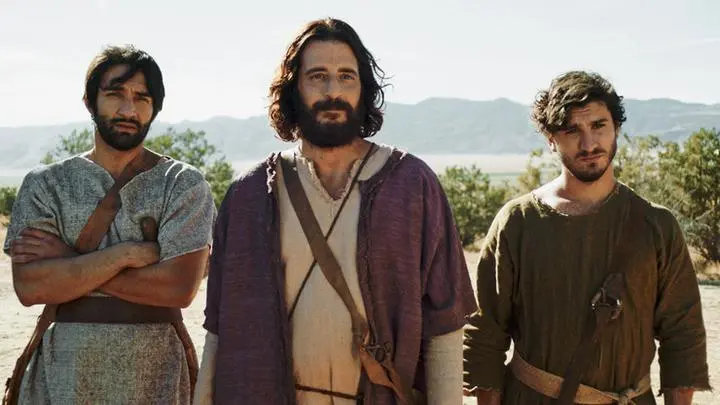
Flashbacks return us to the end of Season 1. After meeting the Samaritan woman, Jesus and the disciples travel to Sychar. Jesus assigns John and Big James to plow and prepare a field, a task they welcome, as it keeps them away from the Samaritans. The deep tension between Jews and Samaritans runs through the episode, and even the disciples wrestle with it. Although Jesus clearly teaches that he has come for all people, including Samaritans, his followers are slow to accept this.
Jesus shares the parable of the lost sheep, celebrating the return of a single lost sinner. Yet, even this story does not immediately change the disciples’ hearts. Later, they visit Melech, a Samaritan wounded during an attack on a Jewish traveler. His story mirrors the Good Samaritan parable but is told from the perspective of the robber. Melech’s wife wonders aloud if Jesus is the Messiah and when their suffering might end. The next day, in an act of undeserved grace, Jesus heals Melech—not because of his faith, but because his mercy extends to all, even Samaritans.
Tensions peak when James and John, overcome by anger, ask to call down fire from heaven on the Samaritans. Jesus intervenes, rebuking their hatred and calling them to redirect their zeal toward his true mission. He tells them their passion will one day be vital—but not for violence. James and John receive his correction with humility.
The episode is framed by John’s creative block at the beginning and inspired clarity at the end. A memory of reading Genesis with Jesus in the Samaritan temple ultimately shapes the introduction of his gospel (John 1), reinforcing that his message is meant for both Jews and Gentiles.
Time for Personal Reflection and Summary
After the episode, invite participants to take a few moments of silence to reflect on what they’ve just experienced. Encourage them to think about what resonated with them, what caught them by surprise, or what was unclear. Next, invite them to think about the characters and consider whether they can identify with them or their situations. Encourage them to write down their thoughts or prepare them for a group discussion.
After a few moments of quiet reflection, invite the group to share the moments from the episode that stood out to them. You can use the “Episode Summary” to help you with this. Try to fill in the details you have noticed are missing from the summary. You can also use more creative methods to compose the summary.
Tip: For a more interactive way to summarize the episode, try using a mind map, The 5W1H Method, or other creative approaches. You can find these in the Leader Resources section online.
Some of the series’ concepts and themes may not be clear to all participants. A “Glossary of Terms” is provided to help with this.
Bible References
- Genesis 1:1-3
- Mark 3:17
- Luke 15:3-7
- John 1:1-5
- John 4:28-30, 39-42
- John 14:12
- John 21:24-25
- Luke 9:52-56
Discussion
In the next section, you will facilitate the group discussion. You can use the questions in their entirety or select those relevant to your group.
What resonated most with you in this episode, and why?
Thomas and Rama joined the disciples as new members. How do you feel when you enter a new group (school, work, sports team, or youth group)? What helps people integrate more easily into a new environment?
How do you see the relationships among the disciples developing? How is their time with Jesus shaping their personalities and character?
Do you enjoy teamwork? What do you see as its strengths and challenges?
After the intense conflict with the Samaritans, Jesus rebukes James and John for their prejudice and hatred, reminding them they are no better than those they judge. Have you ever caught yourself making assumptions about others? How do you think you would respond if Jesus confronted you about them?
Jesus calls James and John the “Sons of Thunder” and points out that their passionate nature can be both a strength and a weakness. Can you think of other character traits that can be both beneficial and harmful, depending on how they are used?
In this episode, John asks the disciples about their first encounter with Jesus. Do you remember when you first encountered Jesus, whether it was just informational or as a personal experience?
In this episode, the story is told from the robber’s point of view—a surprising reversal from how it’s told in the Bible (Luke 10:25-37). Why do you think Jesus chose to highlight that perspective, and what lesson was he teaching his disciples?
At the beginning of the episode, John and the disciples begin recalling their memories of Jesus, moments that would later shape the Gospels. Why do you think it mattered for them to remember and write it down? And how does reflecting on Jesus’ life and words shape your own faith today?
Some possible answers might include: their collective memory, the eventual writing of the Gospels (and later the Bible), the development of their faith, and their understanding of Jesus’ mission.
Throughout the episode, the disciples try to influence Jesus or steer his actions, but he repeatedly resists their attempts. In our own lives, are there ways we try to control how Jesus works or impacts us? What might it look like to let go of control and trust him more fully?
Basic Questions
This first set of questions is straightforward and open-ended—great for seekers or those new to faith.
Advanced Questions
These questions are more in-depth and best suited for Christians and more mature participants. Use your discretion to select the ones that best fit your group.
Conclusion
At the close of the discussion time, take a moment to highlight the main ideas that came up during your conversation. The questions in this club meeting touched on the themes of "living in unity," and "the mix of different personalities."
You can read the quote from the episode below as a final reflection and encouragement. Invite participants to reflect on the message of this episode and consider how it might speak into their own lives.
KEY TAKEAWAY
“Our stories connect us. Tell me your story.”
—Jesus
Afterward, you may want to allow a short moment of silence, prayer, or a smooth transition into the next activity.
Suggested Accompanying Activities
This can be at the beginning or the end of the meeting.
- Before screening the episode, it is helpful to recap the plot of the entire first series to remind your group of the context.
- As the number of characters in the show grows, it can be useful to help participants keep track by creating simple “portraits” of the key figures. For example, you could print pictures with their names on A4 paper and display them framed or laminated in the room. You can use pictures and descriptions of them from the Character Profiles section.
- To encourage a positive atmosphere among participants, consider incorporating a team game, knowledge quiz, physical competition, or other team-building activities.
- You can find suggestions for extra games and activities looking at the Group Activities Library on the Leader Resources page.
Glossary of Terms
Gerizim
Mount Gerizim is known as the “mountain of blessing,” because blessings for obedience to God were proclaimed there before the gathered people of Israel (see Joshua 8:30-35). The Samaritans considered this mountain sacred, believing it to be the same as Mount Moriah (Genesis 22:2), though Jewish tradition connected Mount Moriah with Jerusalem. The Samaritans worshiped God on Mount Gerizim (John 4:20) and ascended it during the feasts of Tabernacles, Pentecost, and Passover—Israel’s most important festivals. This rival worship site, challenging Jerusalem’s temple, caused strong resentment among the Jews.

Ebal
Mount Ebal lies directly opposite Mount Gerizim. The two mountains are so close that their bases form a natural amphitheater, where words spoken on one mountain can be heard clearly from the other. Their sloped hillsides provide space for large gatherings. In his final speech, Moses pointed to these two mountains, instructing the people that once they entered the Promised Land, blessings would be proclaimed from Mount Gerizim and curses from Mount Ebal (Deuteronomy 11:29).
Samaritans
The Samaritans claimed descent from the Israelites, but the Jews considered them unclean and despised them for their mixed heritage and their version of worship. They had built their own temple on Mount Gerizim and recognized only the five books of Moses as Scripture. When Jesus and John visit the Samaritan temple in this episode, we learn that only these five books are kept there. Jesus gently comments, “They are missing out on so much.”
Torah
The Torah (Hebrew for “law” or “teaching”) refers to the first five books of the Hebrew Bible, also known as the Books of Moses. In a broader sense, Torah can refer to the entire Hebrew Bible (our Old Testament) and also includes the oral tradition that interprets the written text. When Rama says she wants to learn to read so she can read the Torah, she likely means the Hebrew Bible.
Sons of Thunder
The “Sons of Thunder” was the nickname Jesus gave to the brothers James and John because of their impulsive and fiery tempers (Mark 3:17). The nickname also sets the stage for one of the major themes of their story—how Jesus gradually transforms their passionate nature into bold but loving leadership.